
-
Brand
-
Formulation Type
-
Packaging
-35.00 ฿
/Sachet
 Ask for case price / Is it in stock? → Chat LINE
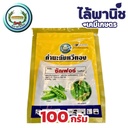
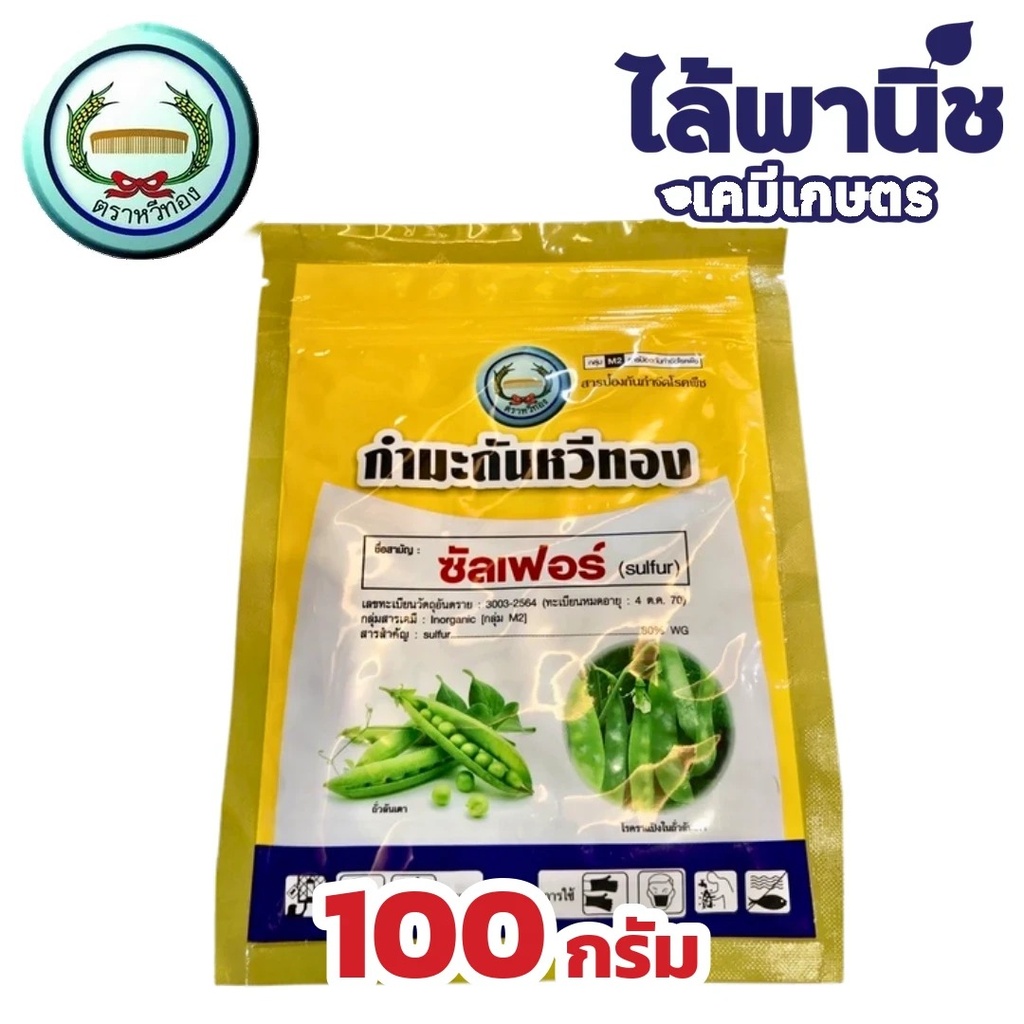
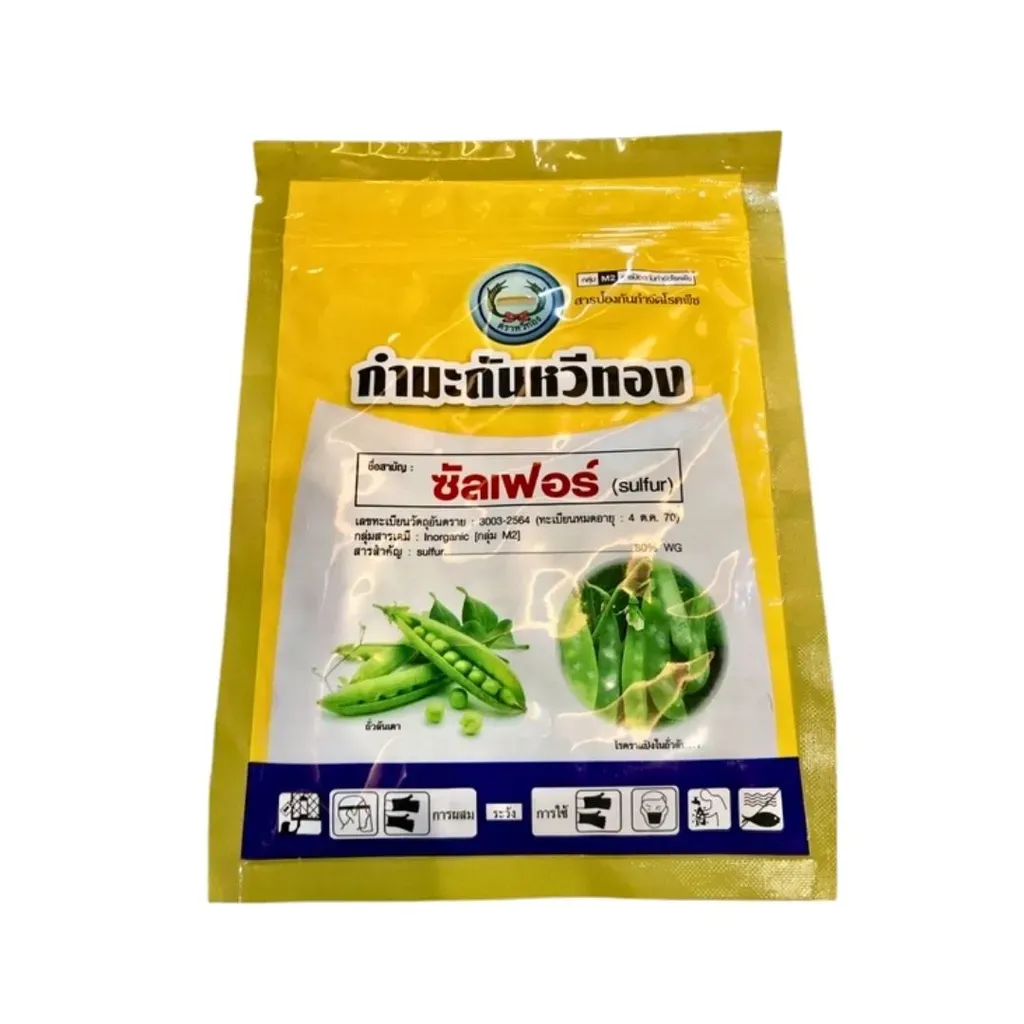
Sulfur — controls and eliminates fungal plant diseases, as well as mites, helps nourish plants for strength
Resistance Management: Sulfur — FRAC Group M02 (Low resistance risk) · Should rotate with different groups in cycles, not using the same group repeatedly, to slow down resistance development · Alternate with different groups when re-spraying
Golden Comb Sulfur is a fine granular sulfur, water-dispersible type (80% WG), acting by contact and vapor. Thus, it helps prevent and eliminate fungal diseases and mites thoroughly. Its extra-small particles make it easily soluble in water and prevent nozzle clogging. It also has good resistance to rain wash-off due to a special leaf coating agent.
Applicable Crops
Peas | Chinese chives / Coffee / Cyperus corymbosus | Rambutan | Tangerine | Lychee | Chili | Garlic | Flowering plants | Field crops | Orange | Lime | Durian | Grapes | Mango | Cucurbit family plants | Onion/Shallot | Yardlong beans | Ornamental plants
Prohibited Crops
No specific prohibited crop information, but it is advisable to test on a small area first, especially for cucurbit family plants, tomatoes, or young leafy plants, which may be sensitive to sulfur when used in high amounts or extremely hot weather conditions.
Mites and Diseases Controlled
- Mites: Red mites | White mites | Rust mites | Velvet mites | Mango red mites | Garlic mites | Gall mites | African red mites | Citrus yellow mites | Chili white mites
- Fungal Diseases: Powdery mildew | Rust | Leaf spot | Scab | Brown rot
Mixing Rates and Usage
| Crop | Substance rate per 20 L of water (1 tank) | Water used per rai | Apply to |
|---|---|---|---|
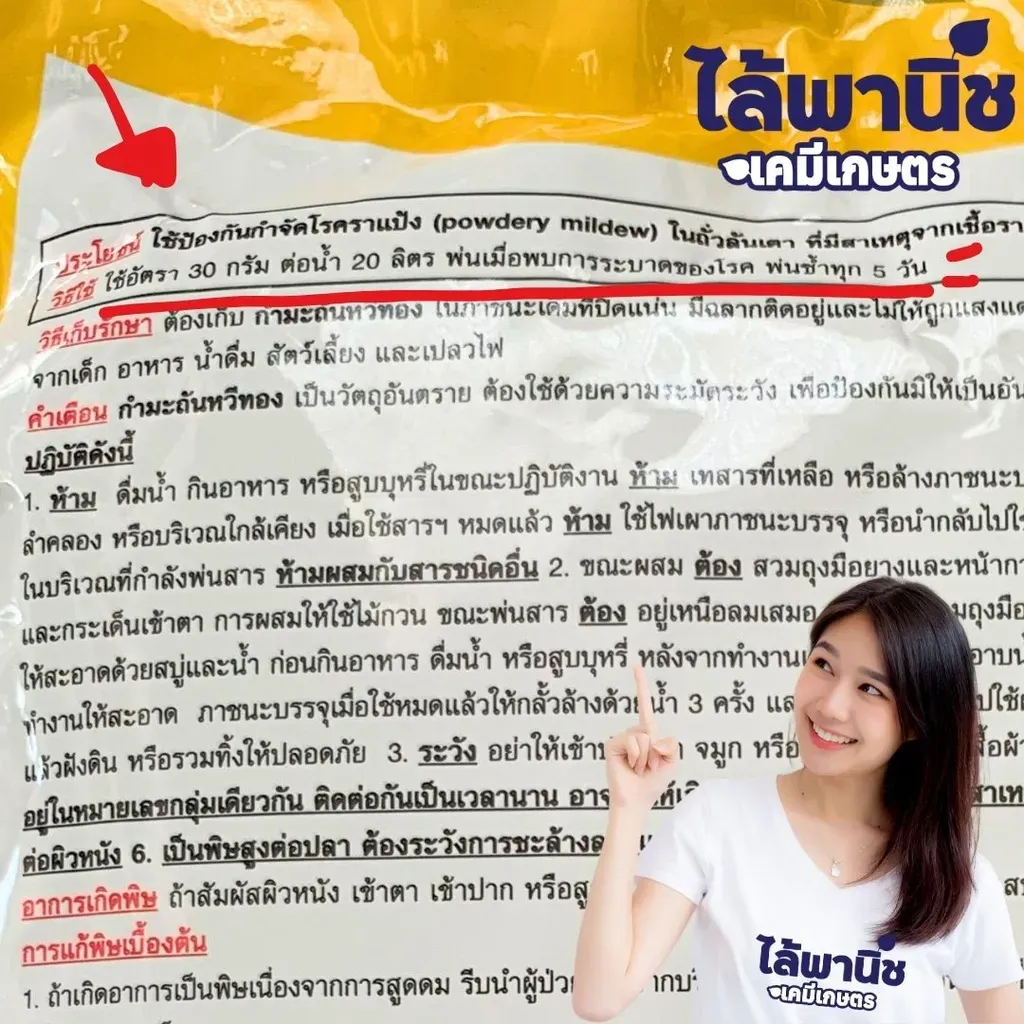
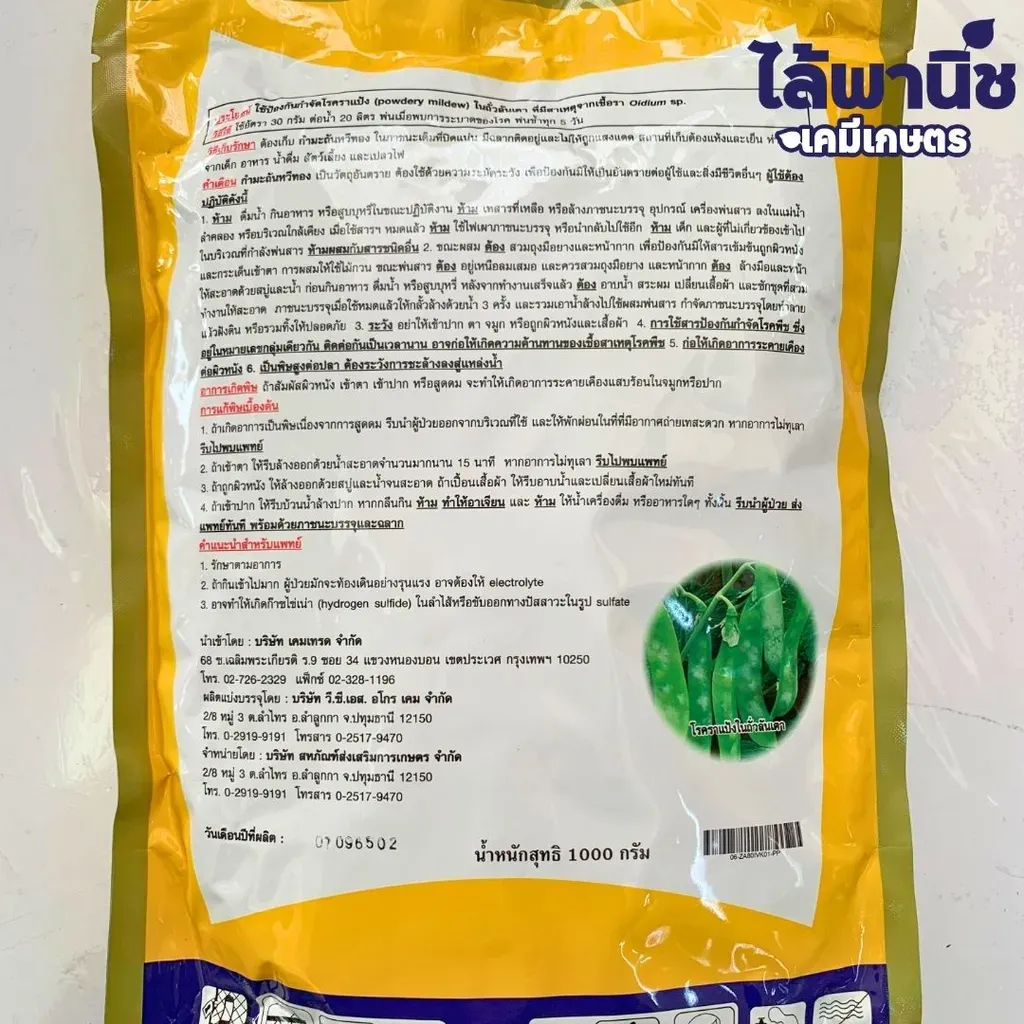
| Peas | 30 g | — | Powdery mildew caused by fungus |
| Chinese chives / Coffee / Cyperus corymbosus | 30 g | — | |
| Rambutan | 20–40 g | — |
Spray when disease outbreak is observed. Re-spray every 5 days.
Read the rates correctly: The numbers in the table are the amount of substance per 1 tank (20 L) of water, not per rai — spraying 1 rai uses multiple tanks of water.
How much can 1 unit (100 g) cover?
Peas at 30 g per 20 L of water (1 tank): 3.3 tanks
Calculated directly from the rates in the table above — does not account for repeat spraying and residual product in the tank. It is advisable to purchase extra.
Note: Re-spray every 7 days if the outbreak persists. For lychee (velvet mites), spray after pruning branches and young leaves. Re-spray 2 more times, 4 days apart.
For Best Results
- Contact fungicide (protective) — coats leaf surface, does not penetrate the plant. Emphasize spraying "before" or when disease just begins. Spray thoroughly on both front and back of leaves. Can be washed off by rain, re-spray after rain. Difficult for pathogens to develop resistance.
- Best: When disease or mite infestation is first observed, and in the early morning or evening when the weather is not excessively hot.
- Do not: Do not spray when the weather is extremely hot or sunny, especially when the temperature is above 32°C, as it may cause leaf burn. Do not use in poorly ventilated greenhouses.
Precautions
- Do not use with lime or alkaline chemicals.
- Avoid spraying when the weather is extremely hot, sunny, or when the temperature is above 32°C, as it may cause leaf burn.
- Do not mix with oil-based substances or oil-formulated chemicals (EC, EW, OD).
- Do not mix with the fungicide captan, Bordeaux mixture, and chlorpyrifos.
- Always wear personal protective equipment during operation, such as gloves, masks, safety glasses, and chemical protective clothing.
- Store in a secure, dry, and cool place, away from sunlight, children's reach, pets, food, and drinking water.
- Use strictly according to recommended amounts. Excessive use may harm plants and acidify the soil.
Read the rates correctly by unit
The rates above are the amount of substance per 1 tank (20 L) of water, which is how it's written on the label. Actual spraying for 1 rai uses approximately 60–80 L (3–4 tanks) of water. Therefore, the amount per rai must be multiplied by the number of tanks used. — Always refer to the container label.