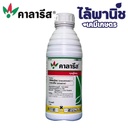


-
Brand
-
Formulation Type
-
Packaging
-340.00 ฿
/Bottle
 Ask for case price / Is it in stock? → Chat LINE
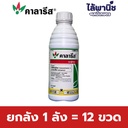
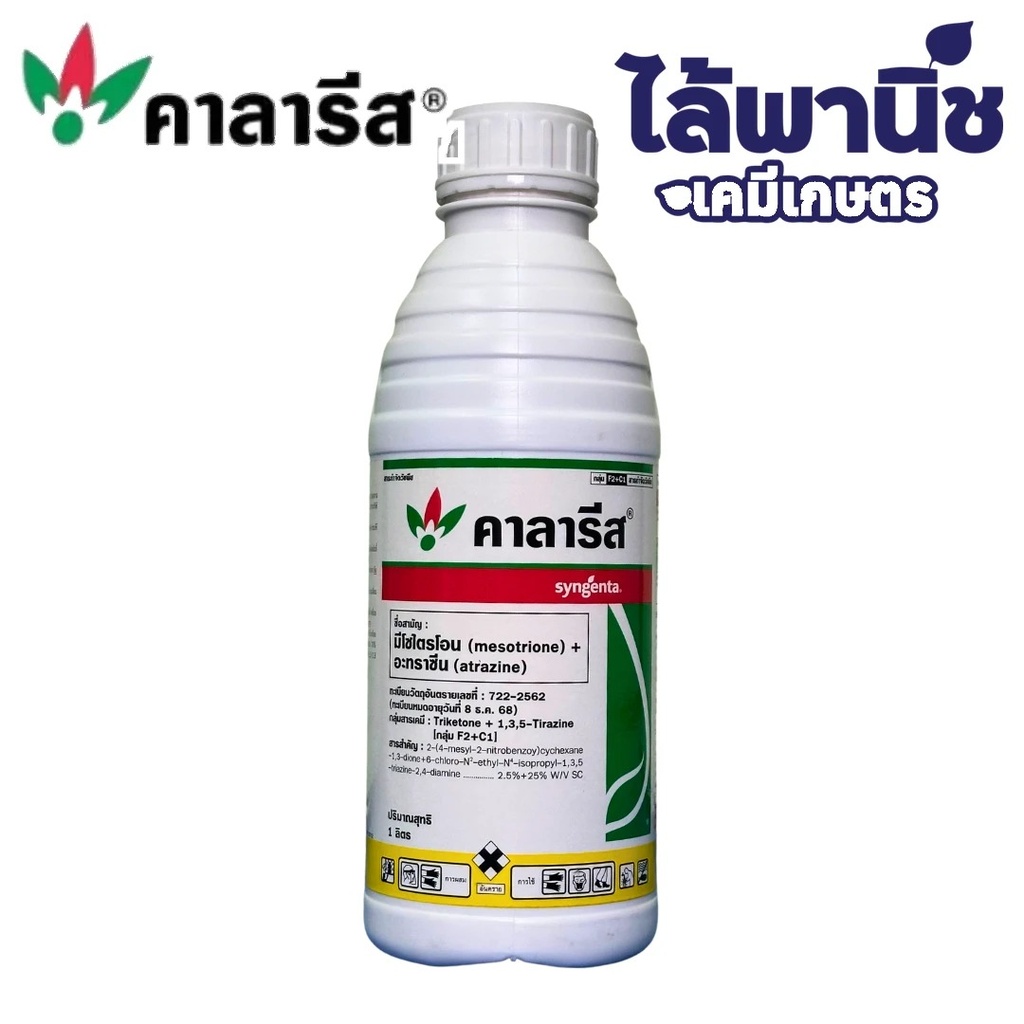
Pre-emergent and Post-emergent Herbicide — Controls grasses and broadleaf weeds in corn and sugarcane. Long-lasting control, fast results.
Resistance Management: Atrazine — HRAC Group C1 · Should be rotated with substances from different groups in cycles, avoiding continuous use of the same group to slow down resistance development · Switch to a different group when re-spraying
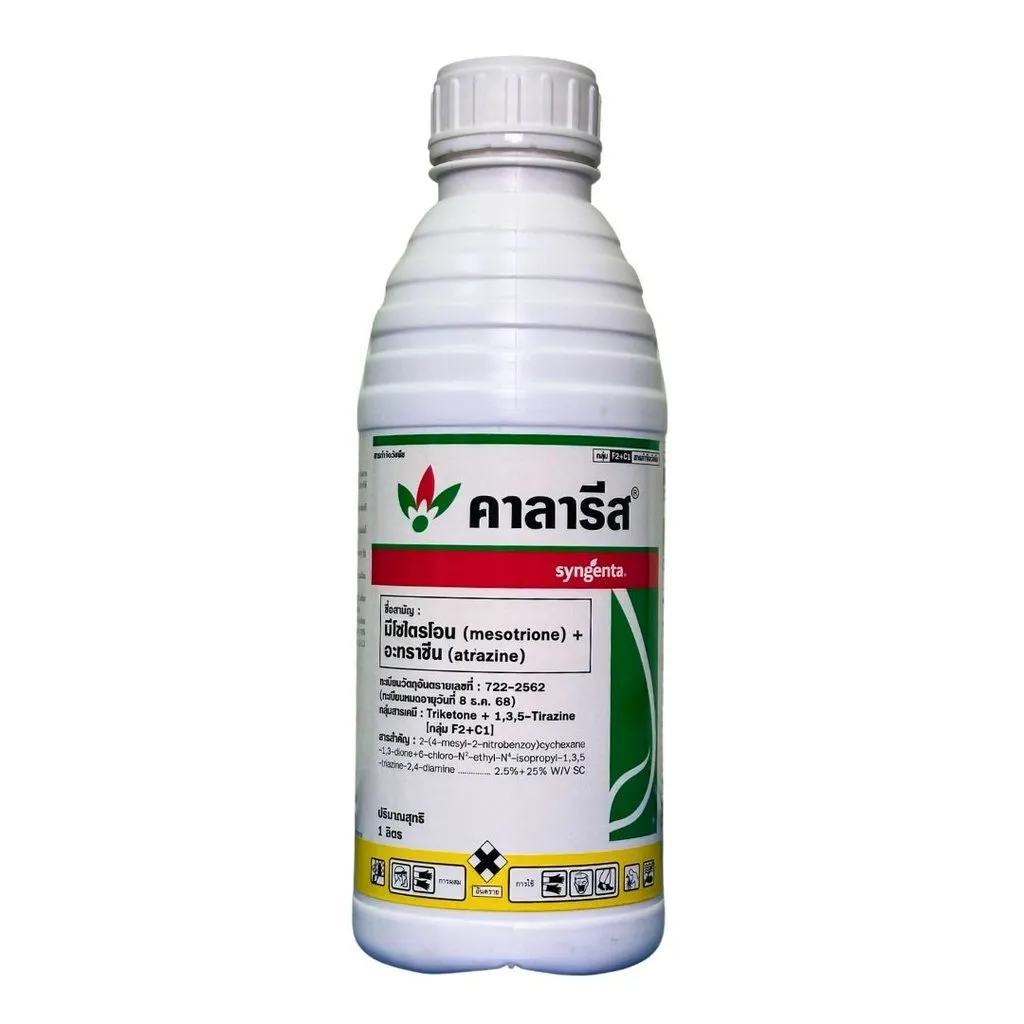
Caralis is a herbicide containing Mesotrione and Atrazine, which acts systemically through the leaves, roots, and stems of weeds. Mesotrione inhibits key enzymes in carotenoid synthesis, causing weeds to turn white and eventually die. Atrazine interferes with photosynthesis, causing weeds to lack energy and dry out and die. With this dual mode of action, Caralis is highly effective in excellent weed control and elimination, and also helps quickly reduce competition for nutrients from the main crop.
Applicable crops
Stated on this bottle's label (rates in the table below): Field corn | Sugarcane | Sweet corn
Other crops where this substance is used — not yet confirmed with this bottle's label: Corn
Prohibited crops
Other crops besides corn and sugarcane, as damage to crops may occur | Not recommended for waxy corn, glutinous corn, or some sweet corn varieties that may be sensitive to the substance, but most field corn and sugarcane will be safe
Weeds controlled
Narrowleaf weeds (White goosegrass) and broadleaf weeds (Common purslane) | Narrowleaf and broadleaf weeds | Narrowleaf weeds (Crowfoot grass, Pink lovegrass) and broadleaf weeds (Common purslane, Pigweed) | Narrowleaf weeds (White goosegrass, Pink lovegrass) and broadleaf weeds (Spiny amaranth, Common purslane, Pigweed) | Crabgrass | Southern sandbur | Barnyardgrass | Birdseed grass | Tropical carpetgrass (Axonopus compressus) | Spiny amaranth | Siam weed | Broadleaf dayflower | Narrowleaf dayflower | Mimosa pudica | Indian acalypha | False buttonweed | Marsh fleabane | Arrowleaf sida | Purple nutsedge
Mixing Rates and Usage
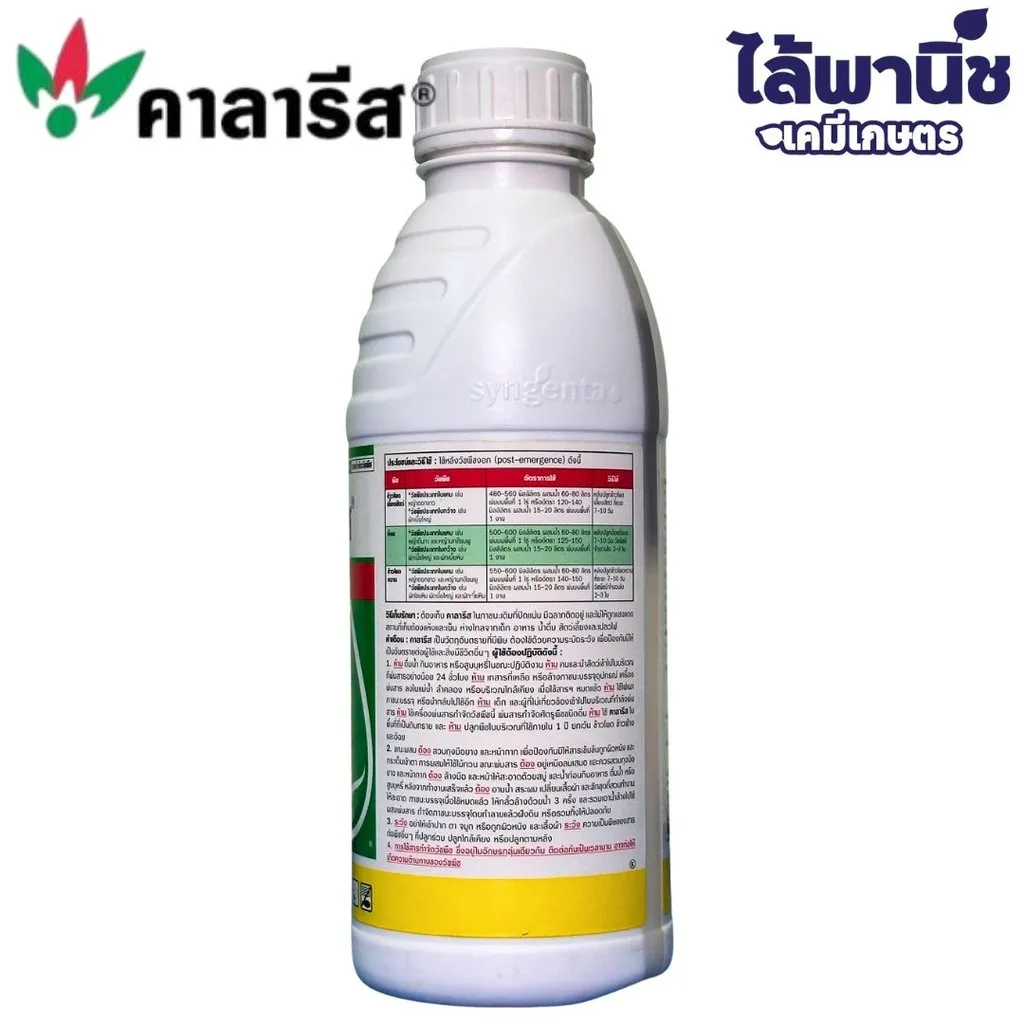
| Crop | Substance Rate | Mix with Water | Area Covered | Apply to |
|---|---|---|---|---|
| Field corn | 480-560 ml | Water 60-80 L | 1 rai | Narrowleaf weeds (White goosegrass) and broadleaf weeds (Common purslane) |
| Field corn | 120-140 ml | Water 15-20 L | 1 ngan | Narrowleaf and broadleaf weeds |
| Sugarcane | 500-600 ml | Water 60-80 L | 1 rai | Narrowleaf weeds (Crowfoot grass, Pink lovegrass) and broadleaf weeds (Common purslane, Pigweed) |
| Sugarcane | 125-150 ml | Water 15-20 L | 1 ngan | Narrowleaf and broadleaf weeds |
| Sweet corn | 550-600 ml | Water 60-80 L | 1 rai | Narrowleaf weeds (White goosegrass, Pink lovegrass) and broadleaf weeds (Spiny amaranth, Common purslane, Pigweed) |
| Sweet corn | 140-150 ml | Water 15-20 L | 1 ngan | Narrowleaf and broadleaf weeds |
Apply post-emergence · 7-10 days after planting field corn
Apply post-emergence · 7-10 days after planting sugarcane, when weeds have 2-3 leaves
Apply post-emergence · 7-10 days after planting sweet corn, when weeds have 2-3 leaves
Read the rates correctly: This product's rate is calculated per area, not per tank — 1 rai = 4 ngan · If spraying with a 20-liter tank, refer to the “1 ngan” row in the table.
1 unit (1 liter) covers approximately how much area?
Field corn at 480-560 ml per rai: 1.8-2.1 rai
Sugarcane at 500-600 ml per rai: 1.7-2 rai
Sweet corn at 550-600 ml per rai: 1.7-1.8 rai
Calculated directly from the rates in the table above — does not account for re-spraying and residue left in the tank. It is advisable to buy extra.
Directions for use: Spray over the soil after planting crops or spray post-emergence when weeds are still small. The soil should be moist during spraying for maximum efficacy.
For Best Results
- Best practice: Spray 7-10 days or 7-15 days after planting corn or sugarcane when weeds are small (narrowleaf 2-3 leaves, broadleaf 4-6 leaves) and the soil has sufficient moisture.
- Do not: Avoid spraying when the soil is very dry or weeds are too large, as this will reduce efficacy. Also, do not spray in extremely hot or very windy conditions.
Precautions
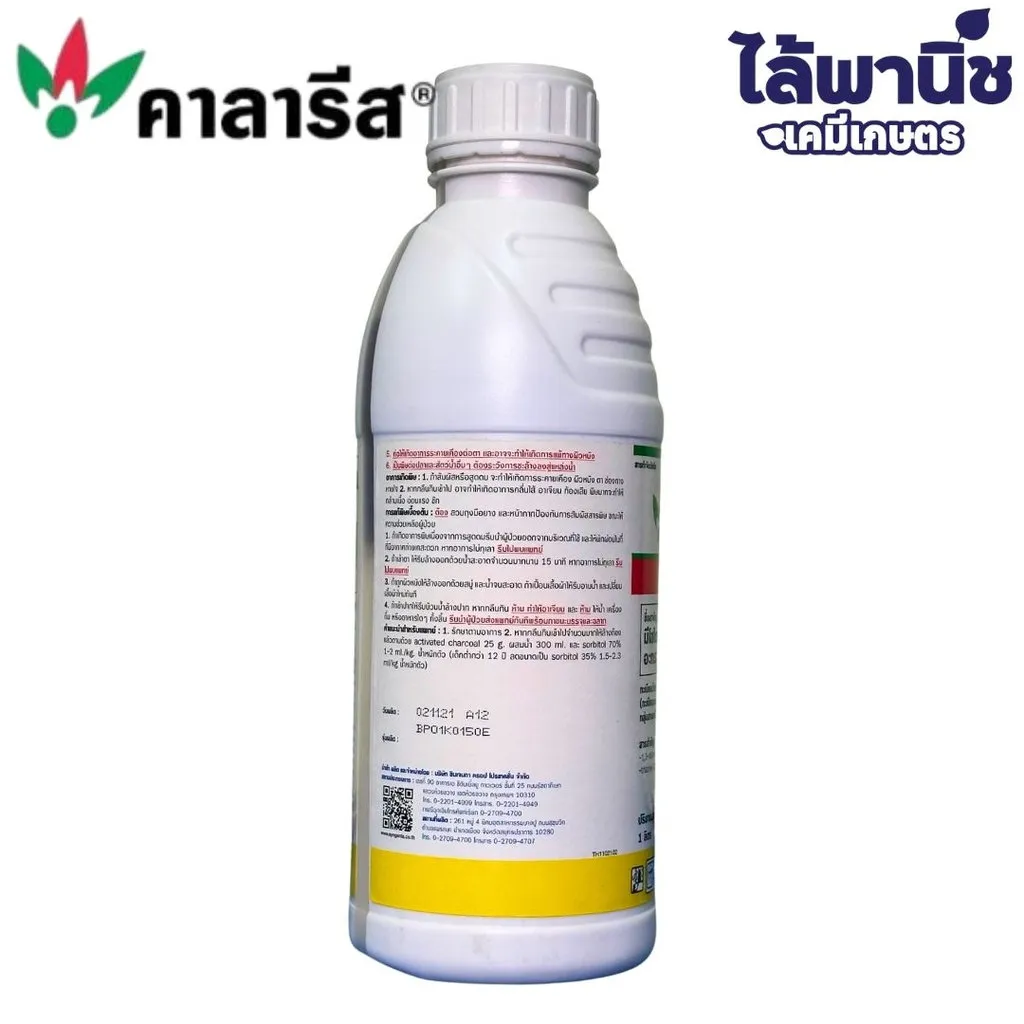
- Personal protective equipment such as gloves, mask, safety glasses, long-sleeved shirt, and long pants should be worn when mixing and spraying chemicals.
- Spray when there is no strong wind to prevent drift onto main crops or unwanted adjacent areas.
- Do not dispose of used containers into water sources or nearby areas, as water contamination may occur (due to Atrazine).
- Store chemicals in a dry and cool place, away from children, food, and pets.
- If abnormal symptoms occur from contact or inhalation of the substance, seek medical attention immediately and bring the product label.