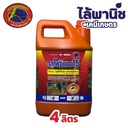


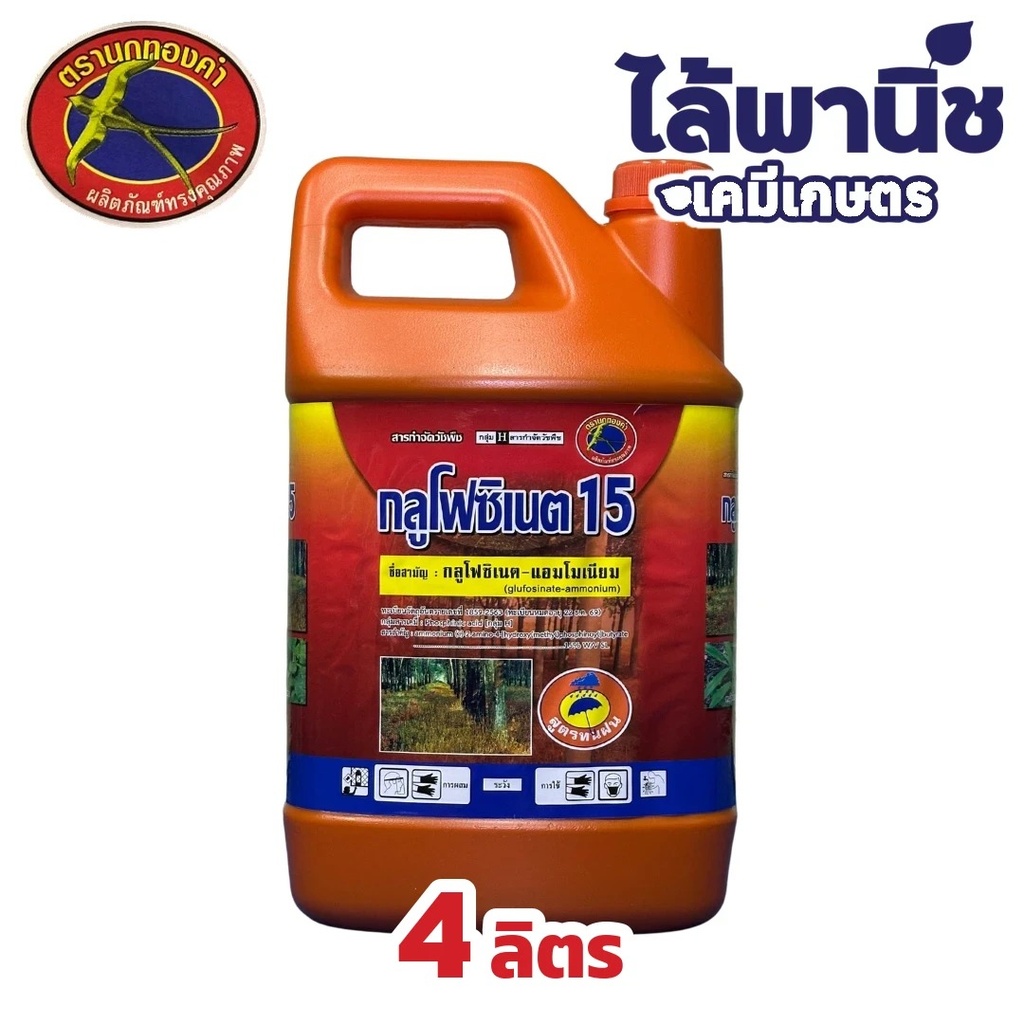
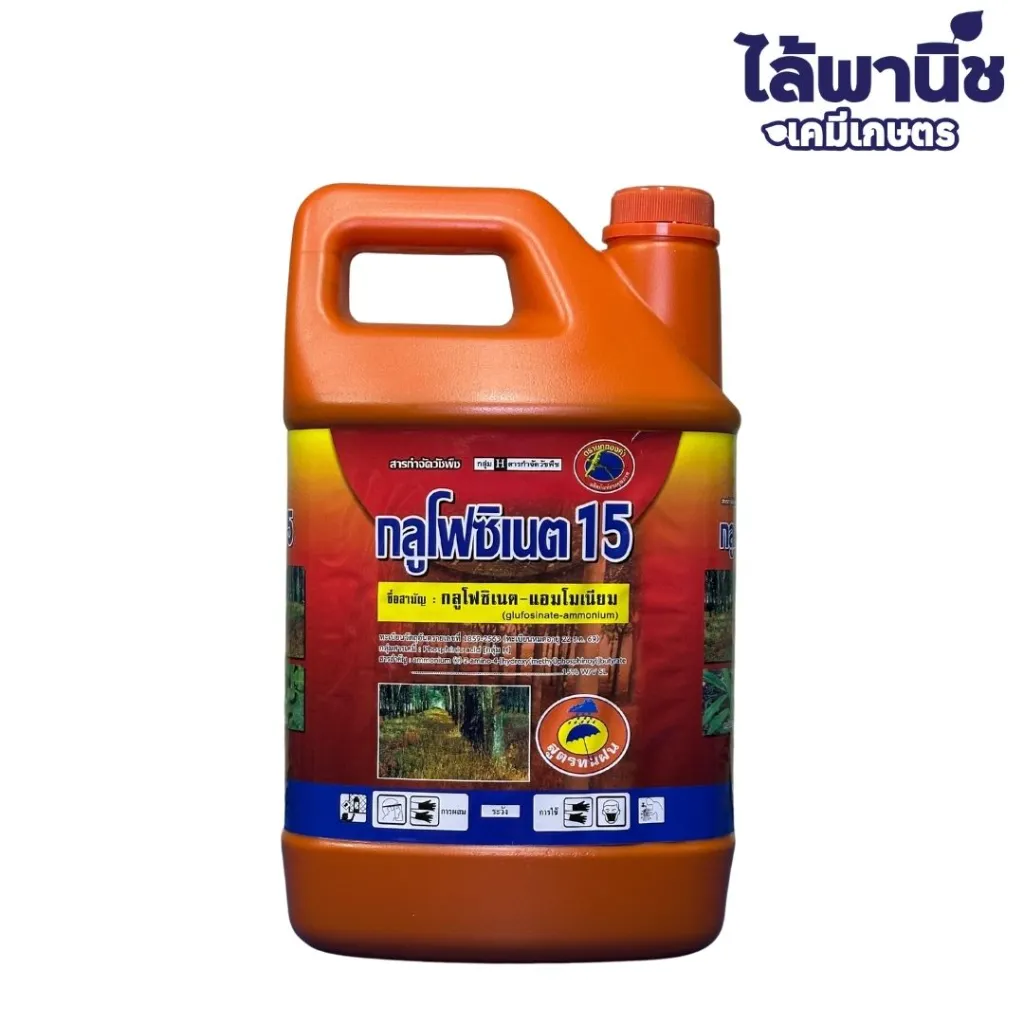

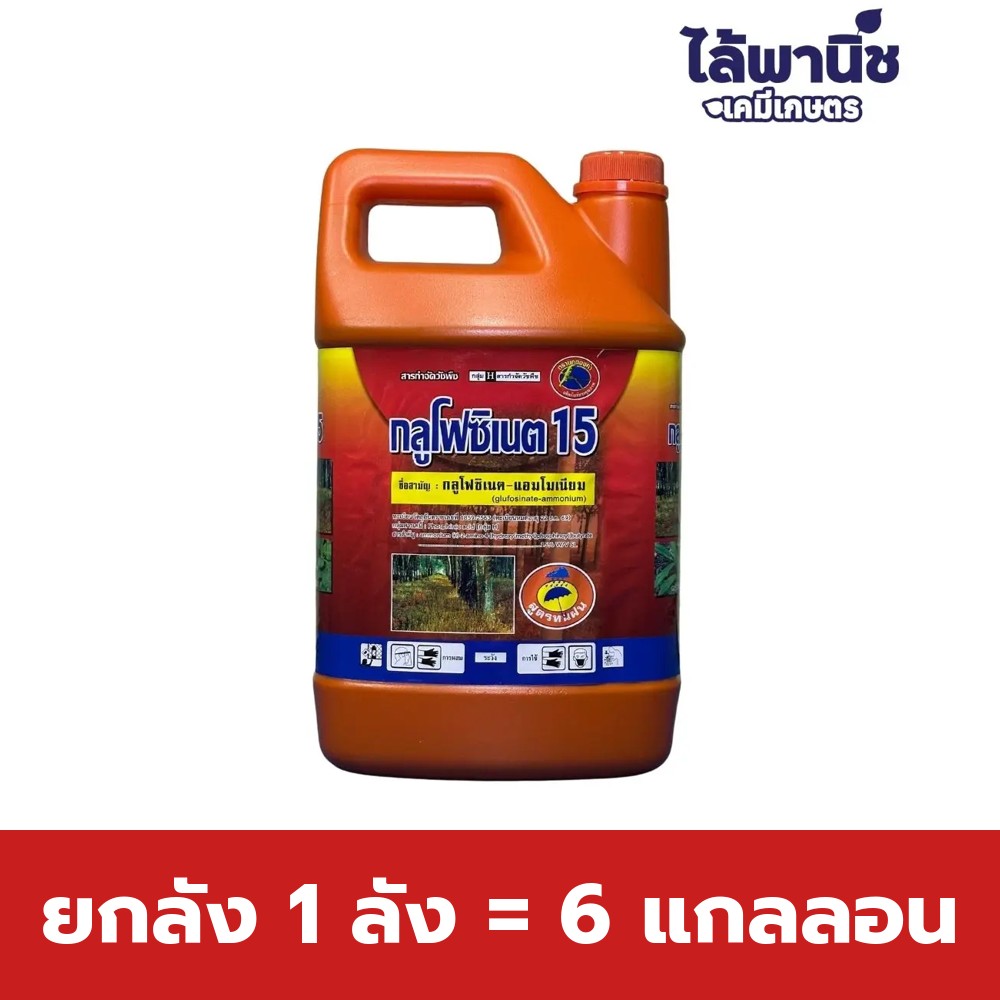
-
Brand
-
Formulation Type
-
Packaging
-390.00 ฿
/Gallon
 Ask for case price / Is it in stock? → Chat LINE
Contact and systemic herbicide — Broad-spectrum weed control, fast-acting, safe for main crop roots
Resistance Management: Glufosinate-ammonium — HRAC Group H · Should be rotated with different groups of substances in cycles, do not use the same group repeatedly to slow down resistance · Switch to a different group when reapplying.
Glufosinate-ammonium is a non-selective herbicide with contact and semi-systemic properties. It inhibits the glutamine synthetase enzyme in weeds, leading to ammonia accumulation and disruption of photosynthesis. This causes weeds to burn and eventually dry out and die within 1-2 weeks after spraying. The substance is not absorbed into the roots, but it is non-selective. Care must be taken to avoid spraying on the leaves or stems of cultivated plants.
Applicable crops
This bottle's label specifies (rates in the table below): Sweet corn
Other crops where this substance is used — Not yet confirmed with this bottle's label Please inquire with the shop before use: Fruit trees | Rubber trees | Oil palm | Corn | Cassava | Coffee | Cocoa | Coconut | Tea | Macadamia | Cashew | Mulberry | Rice paddy bunds | Empty land | Forest plantations
Crops requiring special caution
All cultivated plants (Be careful not to let the spray directly contact the young leaves, growing tips, or desired green parts, as it may stunt plant growth.)
Weeds controlled
Narrow-leaf weeds (Pink grass, Crowfoot grass) and broad-leaf weeds (Amaranth, Phyllanthus urinaria, Purslane) not exceeding 30 cm in height | Same set of weeds not exceeding 30 cm in height | Goosegrass | Dactyloctenium aegyptium | Bird's-eye grass | Ya Teen Tid | Ageratum conyzoides | Large peacock grass | Ya Khor | Ya Khon | Bermuda grass | Imperata cylindrica | Ya Hep | Malaysian grass | Ya Khajon Job | Ya Chan Gad | Portulaca oleracea | Spiny amaranth | Tuk Kae's Foot | Saap Muang | Thua Phi | Kradoom Bai Yai | Siam weed | Mimosa pudica | Phak Praap | Phak Yang Saap Suea | Weed jute | Catnip | Spilanthes acmella | Phak Sian Khon | Ya Yang | Nam Nom Ratchasi | Nuat Pla Duk | Nutgrass | Kok Khanak | Kok Sai | Kok Daeng | Kok Sam Liam | Kok Dok Khiao | Kok Tum Hu Oi
Mixing Rates and Usage
| Crop | Substance Rate | Mix with Water | Area Covered | Apply to |
|---|---|---|---|---|
| Sweet corn — Spray 10 days before planting | 600-650 ml | Water 60-80 L | 1 rai | Narrow-leaf weeds (Pink grass, Crowfoot grass) and broad-leaf weeds (Amaranth, Phyllanthus urinaria, Purslane) not exceeding 30 cm in height — Do not spray over emerged corn plants (as it is a non-selective substance and will damage the plants if sprayed on them) |
| Sweet corn — Spray 10 days before planting | 150-165 ml | Water 15-20 L | 1 ngan | Same set of weeds not exceeding 30 cm in height — Do not spray over emerged corn plants |
Use post-emergence (i.e., spray after weeds have emerged) but must be sprayed 10 days before planting sweet corn.
Read the rates correctly: This product's rate is calculated per area, not per tank — 1 rai = 4 ngan · If spraying with a 20-liter tank, refer to the “1 ngan” row in the table.
How much area can 1 unit (4 L) cover?
Sweet corn — Spray 10 days before planting at 600-650 ml per rai: 6.2-6.7 rai
Calculated directly from the rates in the table above — does not account for repeat spraying and residual product in the tank. It is advisable to purchase extra.
*Note: For perennial weeds or high weed density, the application rate may be adjusted upwards as appropriate and according to label recommendations. Ensure thorough spraying and use an appropriate spray nozzle. The rainfast period is short, only 2-3 hours.
For Best Results
- Best practice: Spray after weeds have emerged, not exceeding 30 cm in height, during periods of good humidity, sufficient sunlight, and temperatures above 15 degrees Celsius. This will help weeds absorb the substance well and ensure full effectiveness.
- Do not: Do not spray when the soil is extremely dry or when there are strong winds, as this will reduce effectiveness and risk spray drift onto main crops.
Precautions
- Always wear personal protective equipment such as gloves, masks, and safety glasses when mixing and spraying chemicals.
- Avoid inhaling vapors or spray mist.
- Do not ingest chemicals and keep out of reach of children, pets, and food sources.
- Store chemicals in a cool, dry, and well-ventilated place away from direct sunlight and heat.
- Do not use turbid water from natural sources to mix chemicals as this may reduce the product's effectiveness.