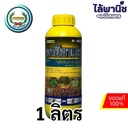
-
Brand
-
Formulation Type
-
Packaging
-180.00 ฿
/Bottle
 Ask for case price / Is it in stock? → Chat LINE
Non-selective herbicide — broad weed control, fast-acting, safe for the main crop when used correctly
Resistance Management: Glufosinate-ammonium — HRAC Group H · Should be rotated with different groups of substances in cycles, do not use the same group repeatedly to slow down resistance · Switch to a different group when reapplying.
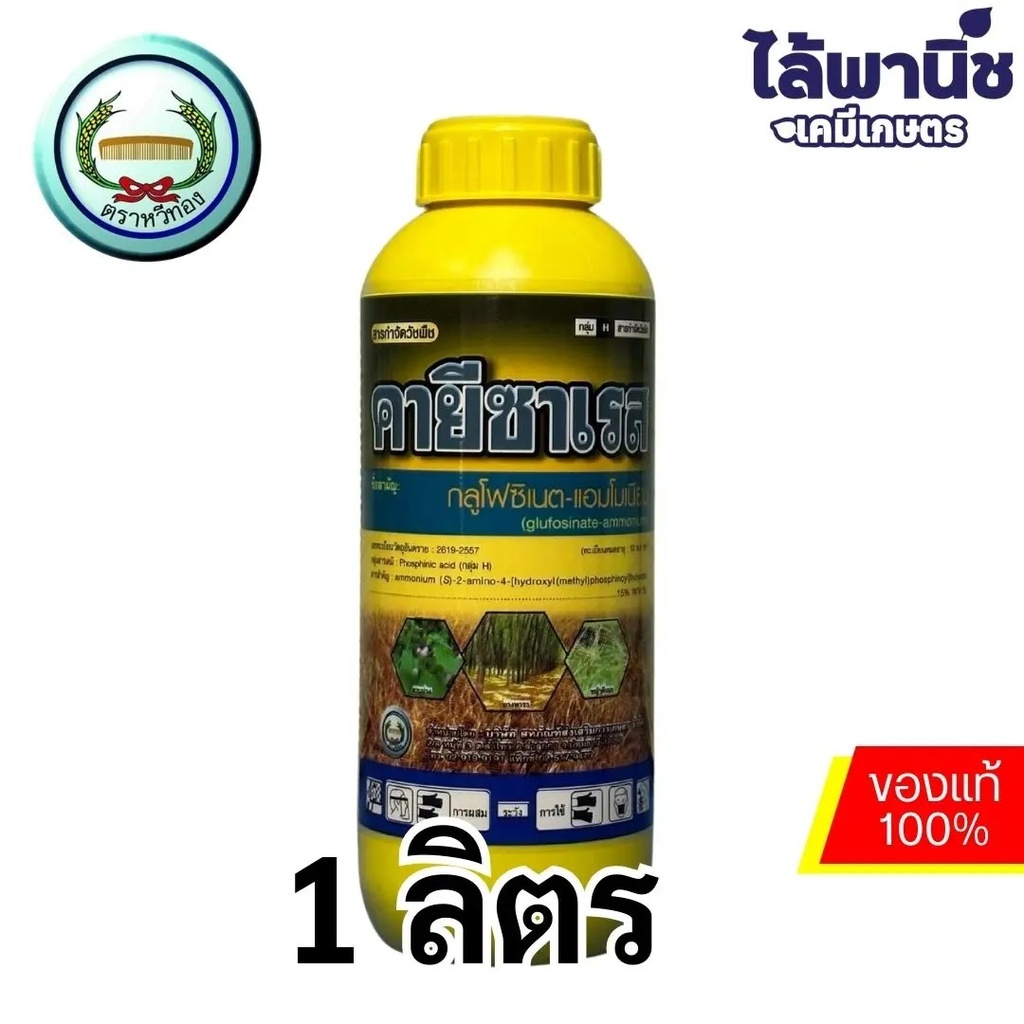
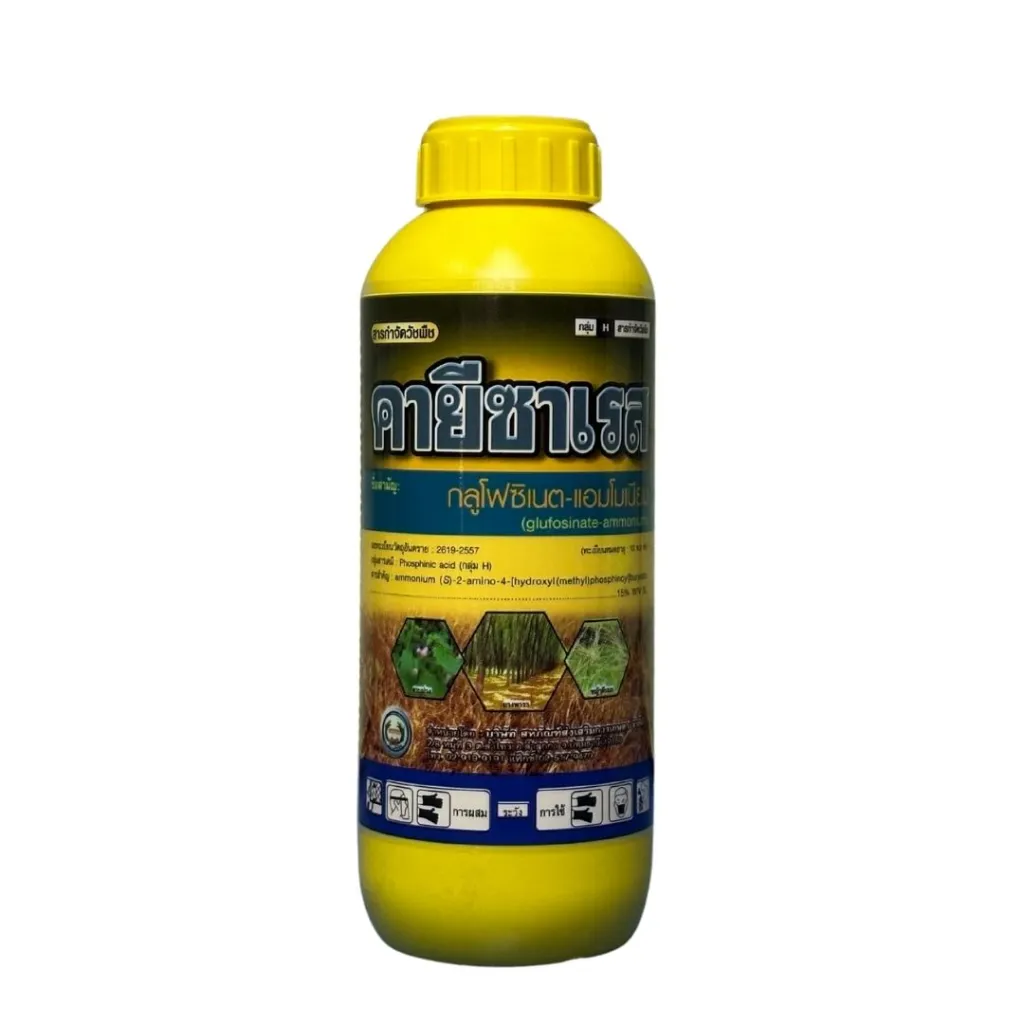
Cayisaresh is a contact and localized systemic herbicide in the Phosphinic acid group. It acts by inhibiting key enzymes in the plant metabolic process, causing the accumulation of ammonia and free radicals, resulting in weeds turning yellow and drying out rapidly within 1-5 days.
Applicable crops
Specified on this bottle's label (rates in the table below): Para rubber
Other crops where this chemical has been used — not confirmed with this bottle's label Please consult the shop before use: Fruit trees | Oil palm | Sweet corn | Cassava | Banana | Papaya | Mango | Lime | Rice | Agricultural and non-agricultural vacant land
Prohibited crops
All cultivated crops intended for harvest (when sprayed directly) | Being a non-selective herbicide, it will destroy all plants that come into direct contact with the chemical
Controllable weeds
Narrowleaf weeds (crowfoot grass, tropical carpet grass) and broadleaf weeds (Siam weed) | Narrowleaf and broadleaf weeds | Goosegrass | Southern crabgrass | Crowfoot grass | Birdseed grass | Crabgrass | Small white flower grass | Large plume grass | Chromolaena odorata (hard-to-eradicate weed) | Stone purslane | Large purslane | Amaranth | Spiny amaranth | Wild hemp | Universal weed | Buttonweed | Wild cleome | Asthma plant | False daisy | Chamber bitter | Dayflower (hard-to-eradicate weed) | Sedge | Purple nutsedge | Flatsedge | Sand sedge | Red sedge | Triangle sedge
Mixing Rates and Usage
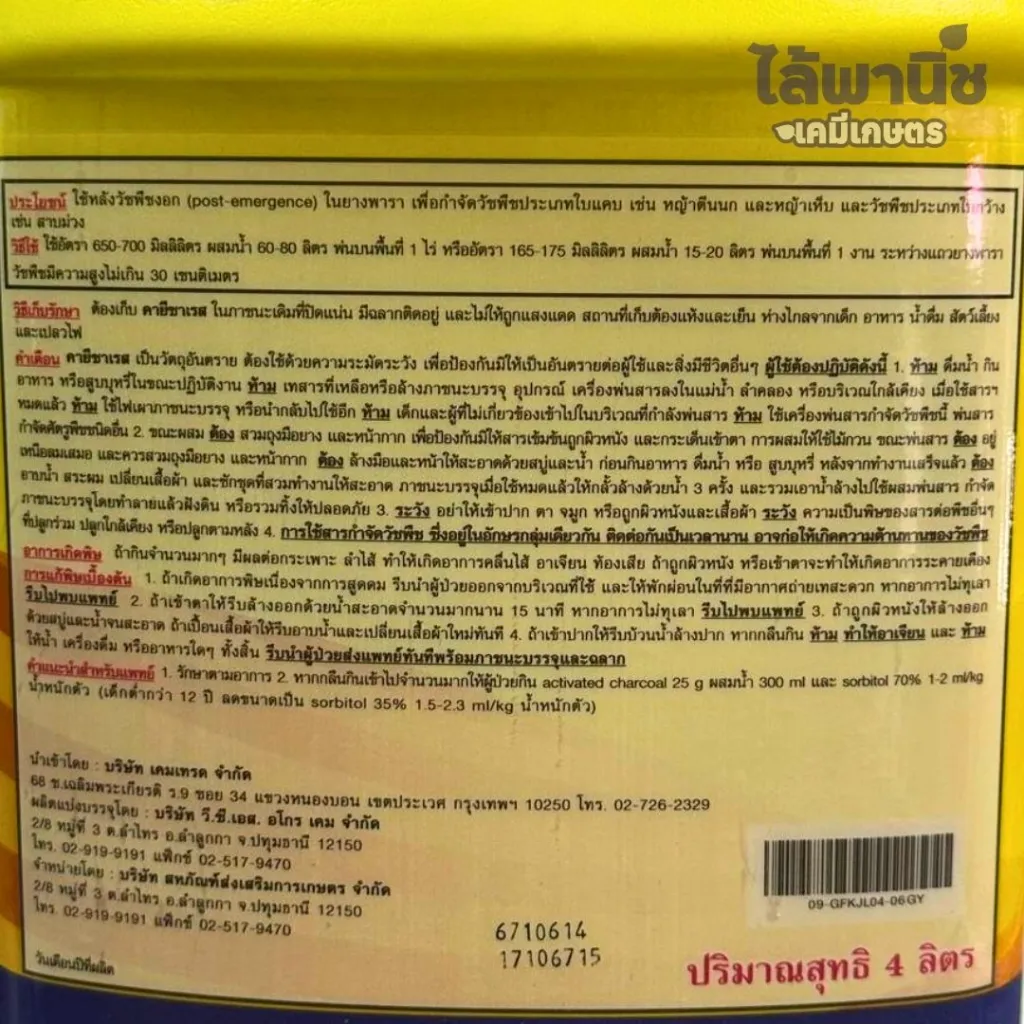
| Crop | Substance Rate | Mix with Water | Area Covered | Apply to |
|---|---|---|---|---|
| Rubber | 650-700 ml | Water 60-80 L | 1 rai | Narrowleaf weeds (crowfoot grass, tropical carpet grass) and broadleaf weeds (Siam weed) — use post-emergence |
| Rubber | 165-175 ml | Water 15-20 L | 1 ngan | Narrowleaf and broadleaf weeds — use post-emergence |
Spray between para rubber rows while weeds do not exceed 30 centimeters in height
Read the rates correctly: This product's rate is calculated per area, not per tank — 1 rai = 4 ngan · If spraying with a 20-liter tank, refer to the “1 ngan” row in the table.
How much area does 1 package (1 L) cover?
Para rubber at 650-700 ml per rai: 1.4-1.5 rai
Calculated directly from the rates in the table above — does not account for re-spraying and residual chemical left in the tank; please buy extra to be safe
Note: Spray when weeds do not exceed 30 centimeters in height for maximum efficiency, and should be sprayed in areas where the soil has moisture
For Best Results
- Best: When weeds are actively growing, not exceeding 30 centimeters in height, soil is moist, and there is bright sunlight. Spray in the morning when there is no heavy rain
- Prohibited: Do not spray while it is raining or rain is expected within 30 minutes to 2-3 hours after spraying, and do not spray directly on the main crop
Precautions
- Being a non-selective herbicide, personal protective equipment such as gloves, goggles, and a mask should be worn every time during use to prevent direct contact
- Avoid spraying directly on the green parts of the main crop as this will cause damage to the plant
- Do not breathe in the spray mist. Be careful not to let it get into eyes, on skin, or on clothing. If swallowed, do not induce vomiting, rinse mouth with water and see a doctor immediately along with showing the product label
- After use, refrain from entering the area for 24 hours and wash spraying equipment thoroughly with clean water multiple times
- Even though glufosinate-ammonium decomposes rapidly in the soil by microorganisms and does not readily move in the soil, it should still be used at the recommended rates and avoid using excessive amounts
- Some research reports abroad indicate that residues may be found and affect humans and animals, even though it is a substance recommended by the Department of Agriculture to replace some chemicals.