

-
Brand
-
Formulation Type
-
Packaging
-280.00 ฿
/Box
 Ask for case price / Is it in stock? → Chat LINE
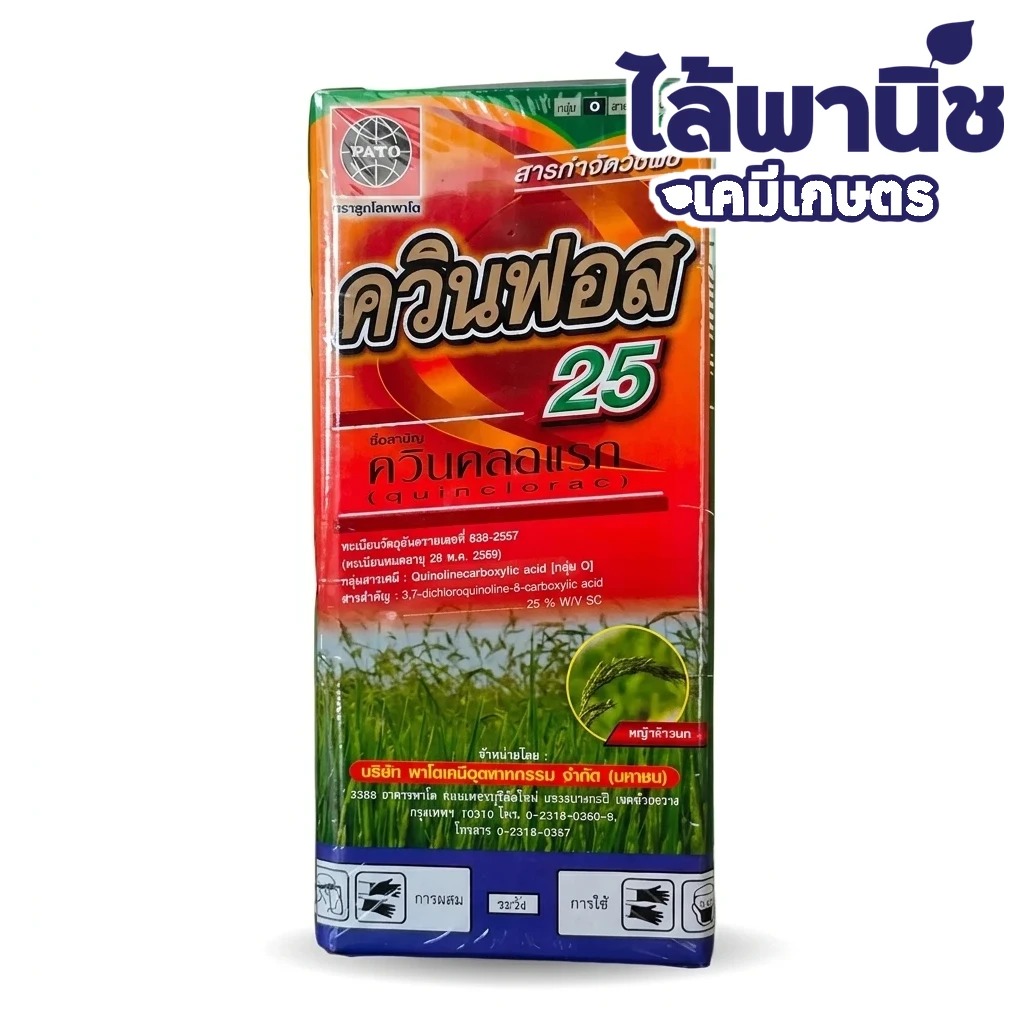
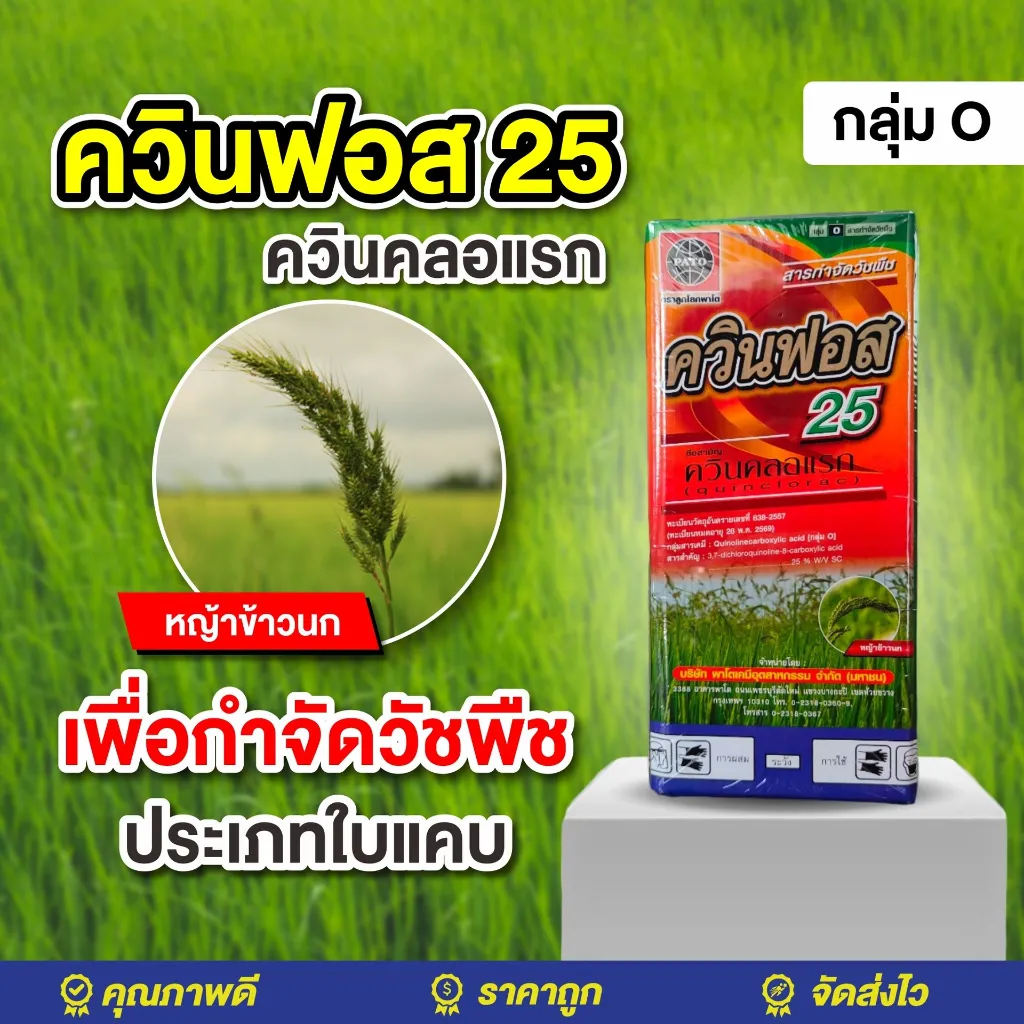
Herbicide for paddy rice — Effectively controls barnyardgrass and other narrow-leaf weeds in paddy rice
Resistance management: Quinclorac — HRAC Group O/L · Should be rotated with different groups, not using the same group repeatedly, to slow down resistance development · Switch to a different group when reapplying.
Quinclorac acts systemically, as weeds absorb the substance through both leaves and roots, causing abnormal, distorted growth and eventual death of the weeds. The substance translocates throughout the entire plant, including roots and rhizomes, for effective control.
Applicable crops
Paddy rice (wet-sown | transplanted)
Prohibited crops
Other crops besides paddy rice | May cause harm to crops if used for unintended purposes
Weeds Controlled
- Narrow-leaf weeds: Barnyardgrass | Pink sprangletop | Crowfoot grass (Red sprangletop) | Junglerice | Leptochloa chinensis | Goosegrass | Crowfoot grass | Echinochloa colona | Ischaemum rugosum | Cyperus difformis
- Broadleaf weeds (some species): Monochoria vaginalis
Mixing Rates and Usage
Please read mixing rates from the bottle label.
Application notes: Before spraying, drain water from the paddy field and re-flood the field within 2-3 days after spraying to enhance efficacy. If weeds are already grown, spot spraying can be done at a rate of 80 cc per 15-20 L of water for areas with dense weeds.
For Best Results
- Best time: 7-15 days after rice sowing, when weeds are small (2-4 leaves) or not taller than 10-15 cm.
- Do not: Before rice sowing or when the soil is completely dry (efficacy will be significantly reduced).
Precautions
- Drain water from the paddy field before spraying and re-flood the field within 2-3 days after spraying.
- Spray when the soil is moist to ensure good adhesion of the substance to weeds.
- Strictly follow the recommended application rates to prevent adverse effects on the main crop and the environment.
- Avoid spraying in strong winds to prevent spray drift onto non-target plants.
- Wear personal protective equipment such as gloves, masks, and chemical protective clothing during use.
- If Quinclorac comes into contact with skin, eyes, or nose, it may cause irritation. Rinse immediately with plenty of clean water.