

-
Brand
-
Formulation Type
-
Packaging
-450.00 ฿
/Box
 Ask for case price / Is it in stock? → Chat LINE
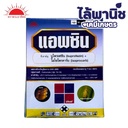
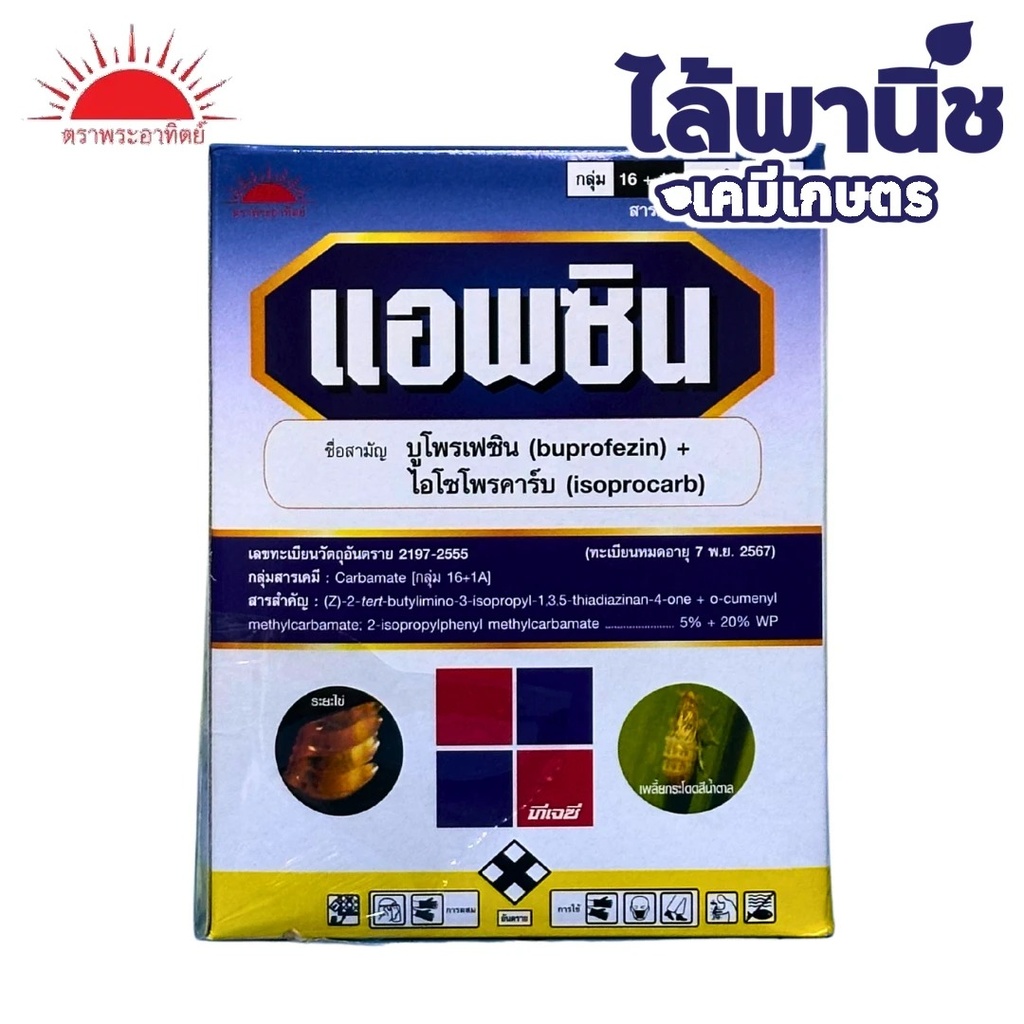
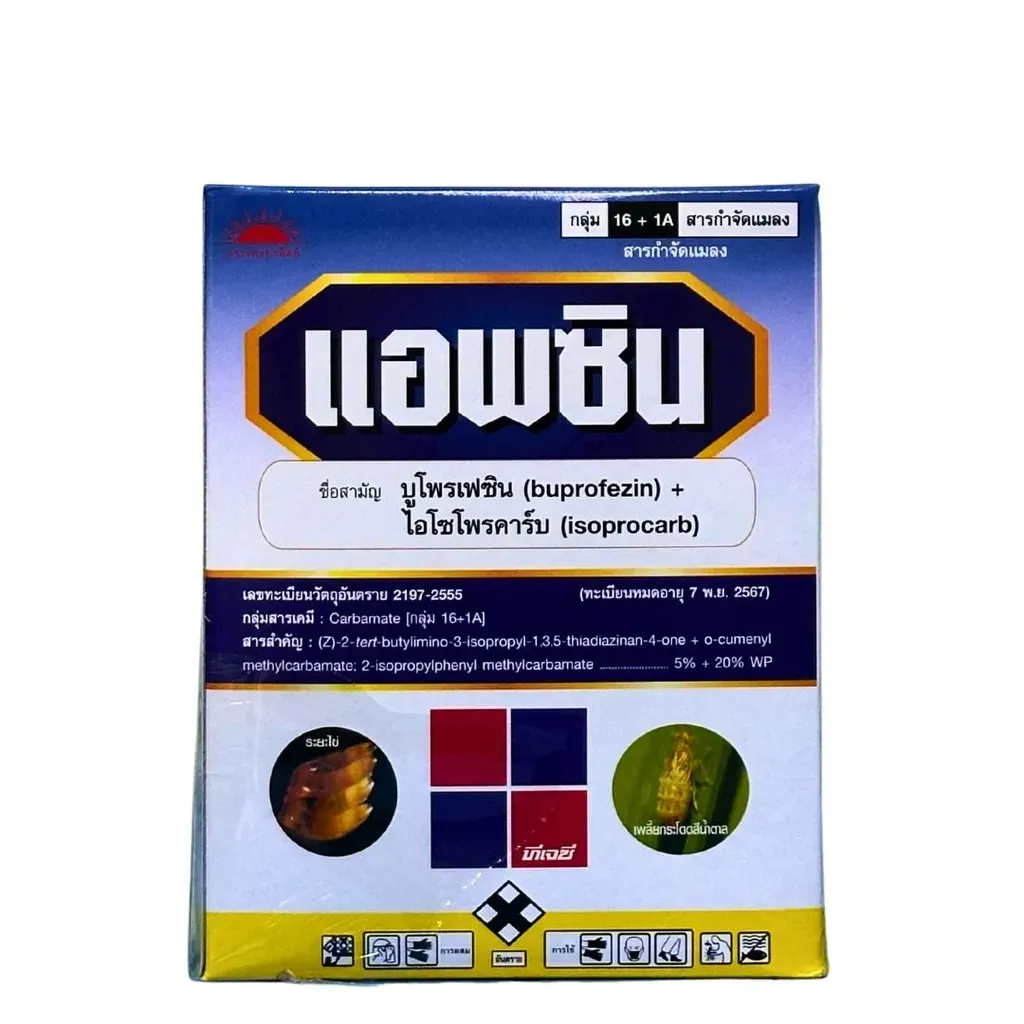
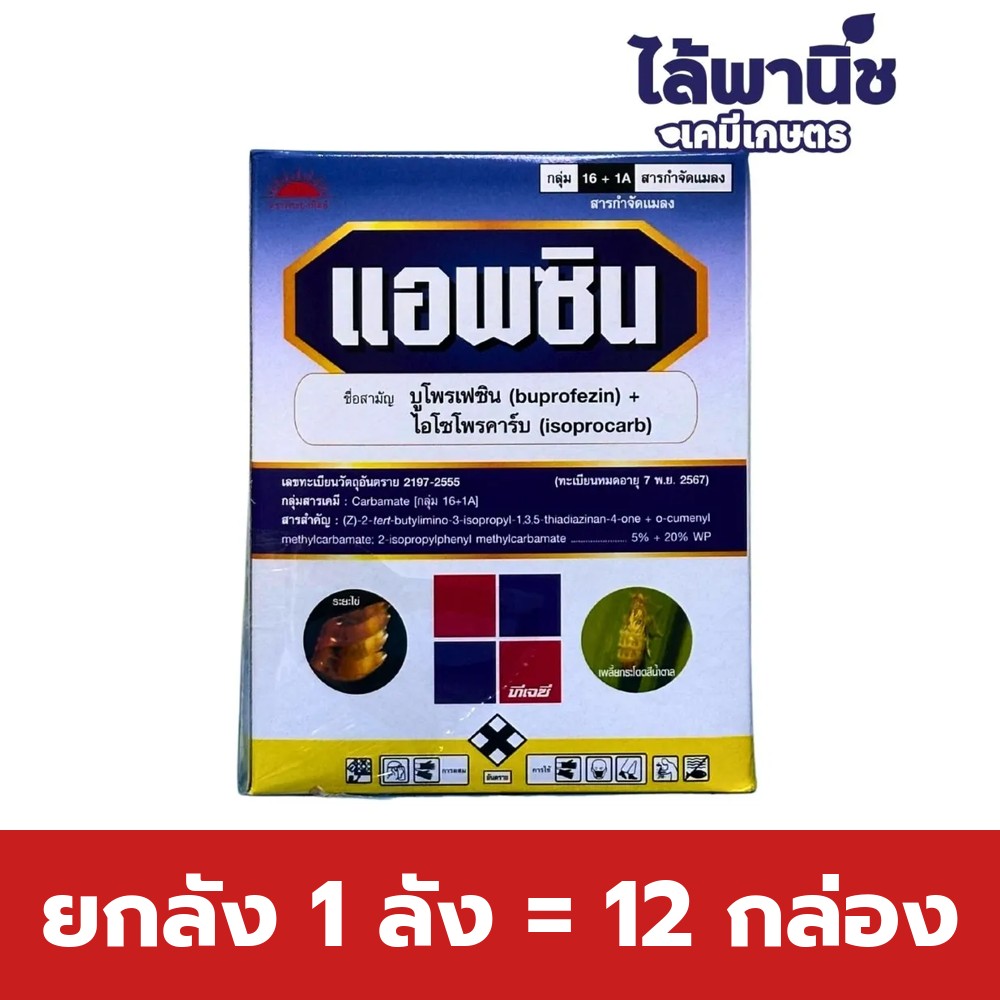
Buprofezin + Isoprocarb — Mixed insecticide for brown planthopper, targeting both nymphs and adults.
Resistance management: Buprofezin — IRAC Group 16 · Isoprocarb — IRAC Group 1A · Rotate with other chemical groups when making repeated applications.
A formulated mixture of Buprofezin and Isoprocarb (BPMC) providing comprehensive control across all stages of planthoppers. Buprofezin is an IGR (Group 16) inhibiting chitin synthesis in nymphs, preventing molting with long-lasting action. Isoprocarb is a carbamate inhibiting cholinesterase with rapid action on adults. Both work synergistically to control populations in both the short and long term.
Target insects
- Brown planthopper (BPH): Both nymphs and adults
- White-backed planthopper (WBPH): Both nymphs and adults
- Leafhopper: Leafhopper in rice paddies
Applicable crops
Rice
Mixing Rates and Usage
| Crop | Substance rate per 20 L of water (1 tank) | Water used per rai | Apply to |
|---|---|---|---|
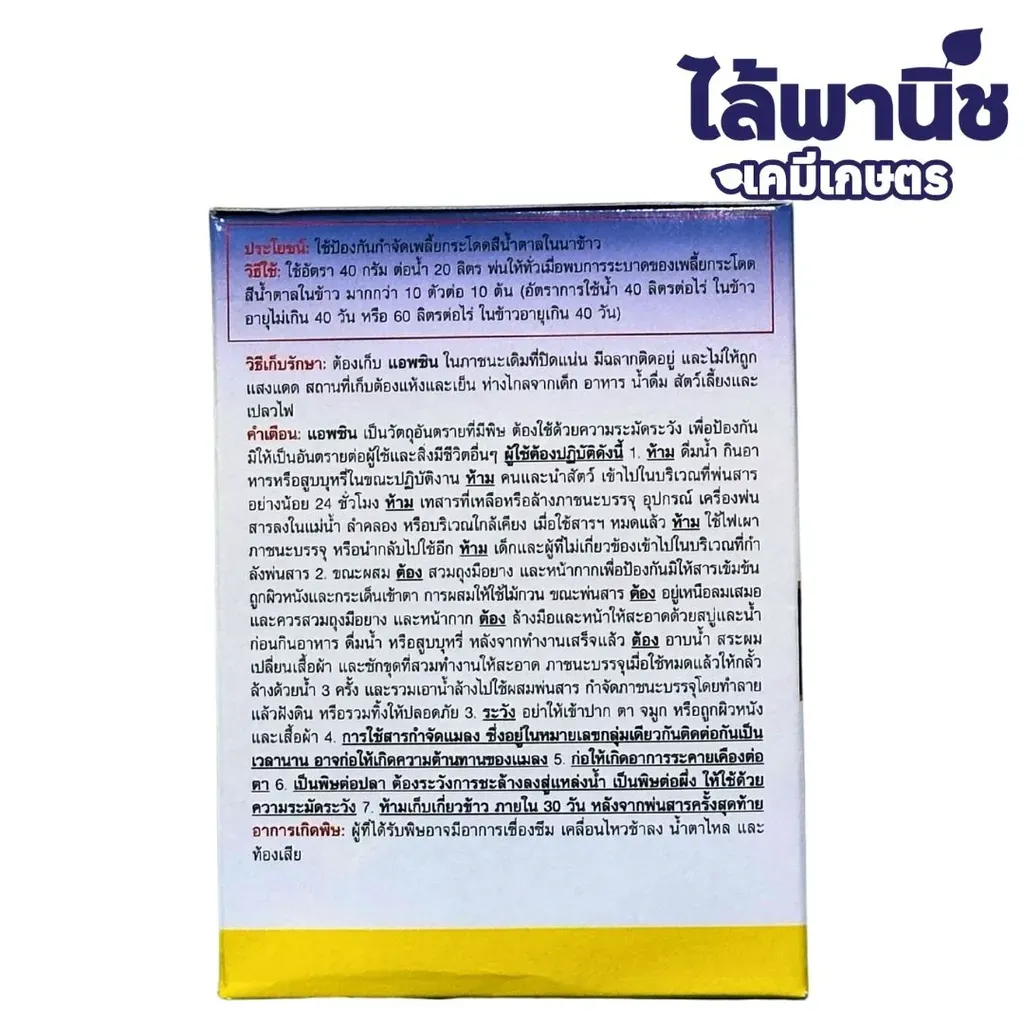
| Rice | 40 g | 40 L/rai (rice aged under 40 days) or 60 L/rai (rice aged over 40 days) | Brown planthopper |
Spray thoroughly when brown planthopper infestation in rice exceeds 10 insects per 10 plants
Read the rates correctly: The numbers in the table are the amount of substance per 1 tank (20 L) of water, not per rai — spraying 1 rai uses multiple tanks of water.
Coverage per 1 unit pack (1 kg)
Rice at 40 g per 20 L water (1 tank) and water usage of 40-60 L/rai: 25 tanks or 8.3-12 rai
Calculated directly from the rates in the table above — does not account for repeated applications or leftover residue in the tank; please purchase extra as a buffer.
For Best Results
- Contact insecticide — Acts upon direct contact with the insect; must be sprayed thoroughly on the insect body / entire canopy · Fast-acting, but can be washed off by rain. If it rains after spraying, a re-spray is necessary
- Best suited for: Spraying when nymphs are detected or when planthopper populations start to rise (count >5 insects/plant).
- Not recommended: Unnecessary regular spraying — destroys beneficial insects and risks resurgence
Precautions
- Spray directly onto the base of the rice plants where planthoppers live.
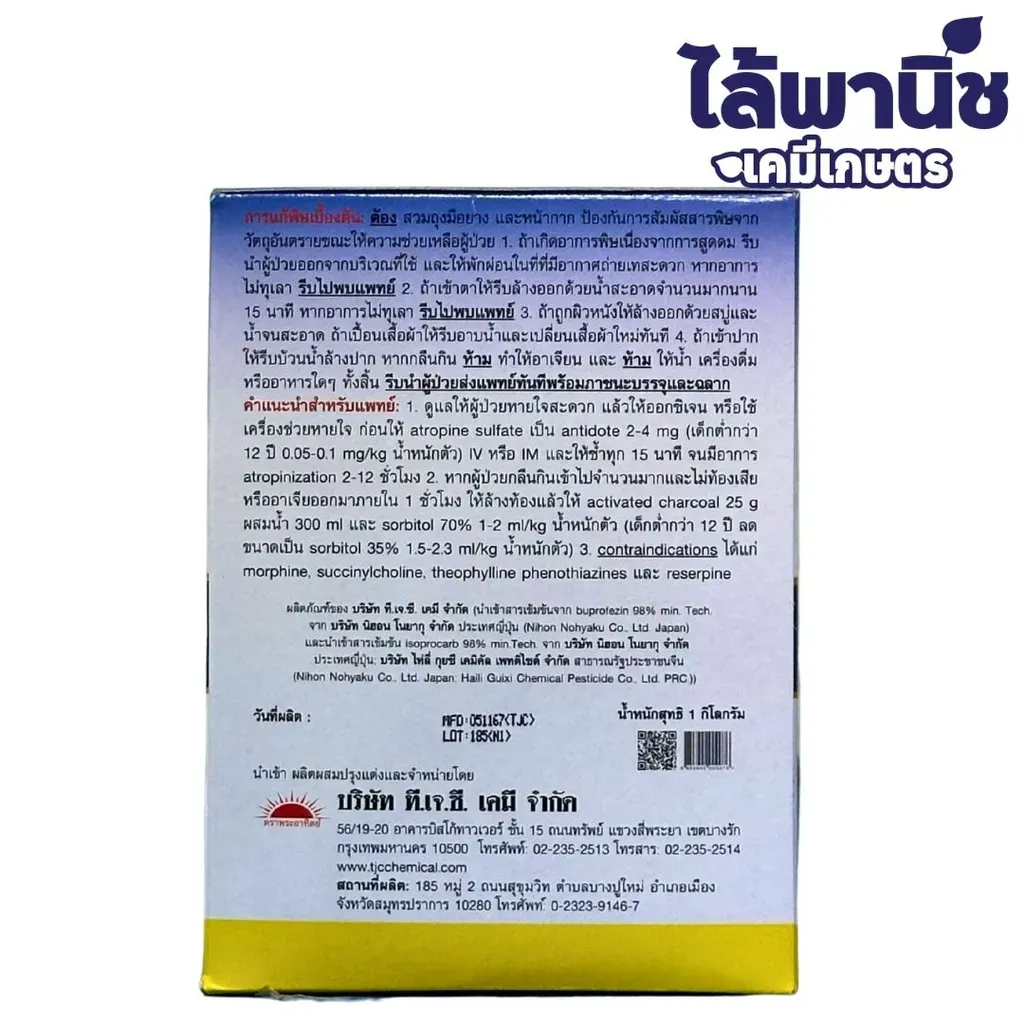
- Highly toxic to fish and aquatic animals — do not allow water to drain into fish paddies or shrimp ponds.
- Rotate with different mode-of-action chemicals to prevent BPH resistance, which develops easily.
- Wear gloves and safety glasses when mixing and spraying