
-
Brand
-
Formulation Type
-
Packaging
-390.00 ฿
/Bottle
 Ask for case price / Is it in stock? → Chat LINE
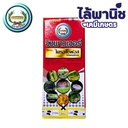
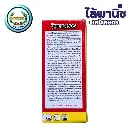
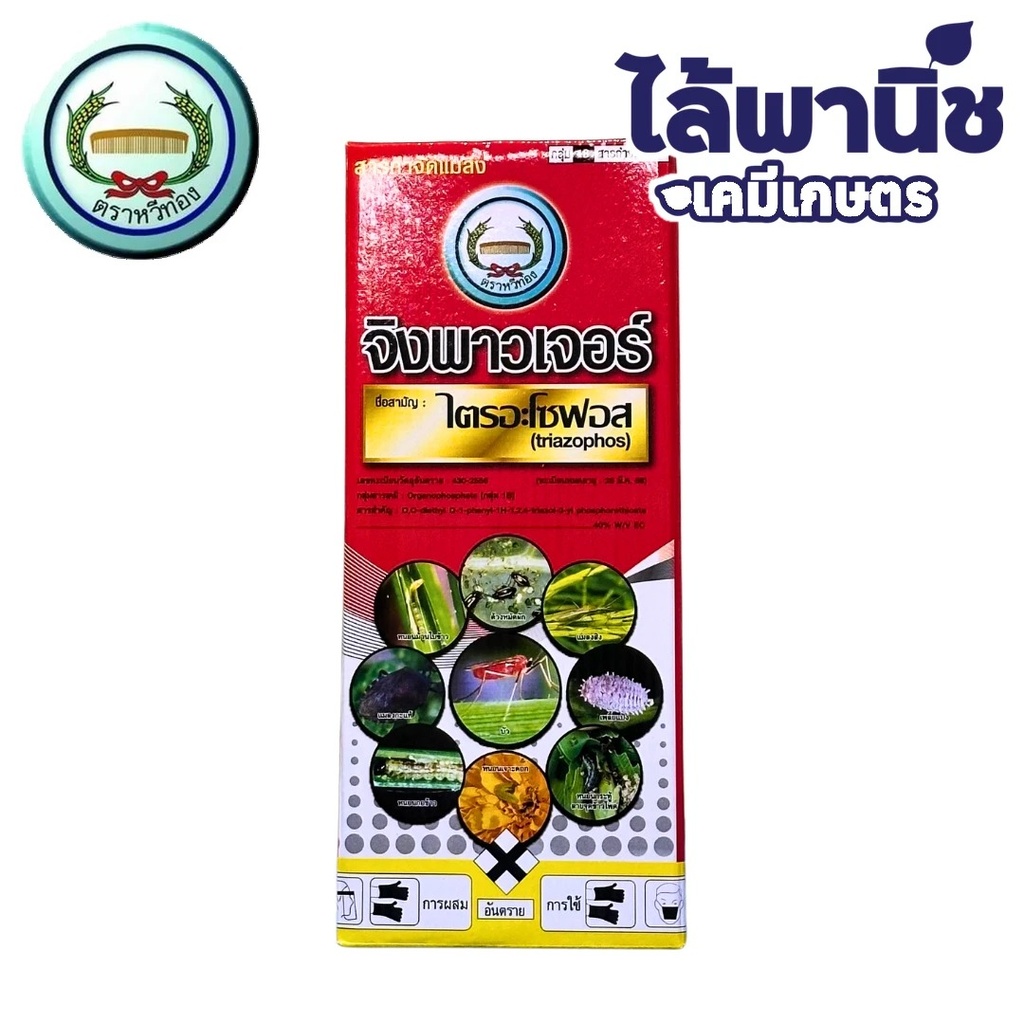
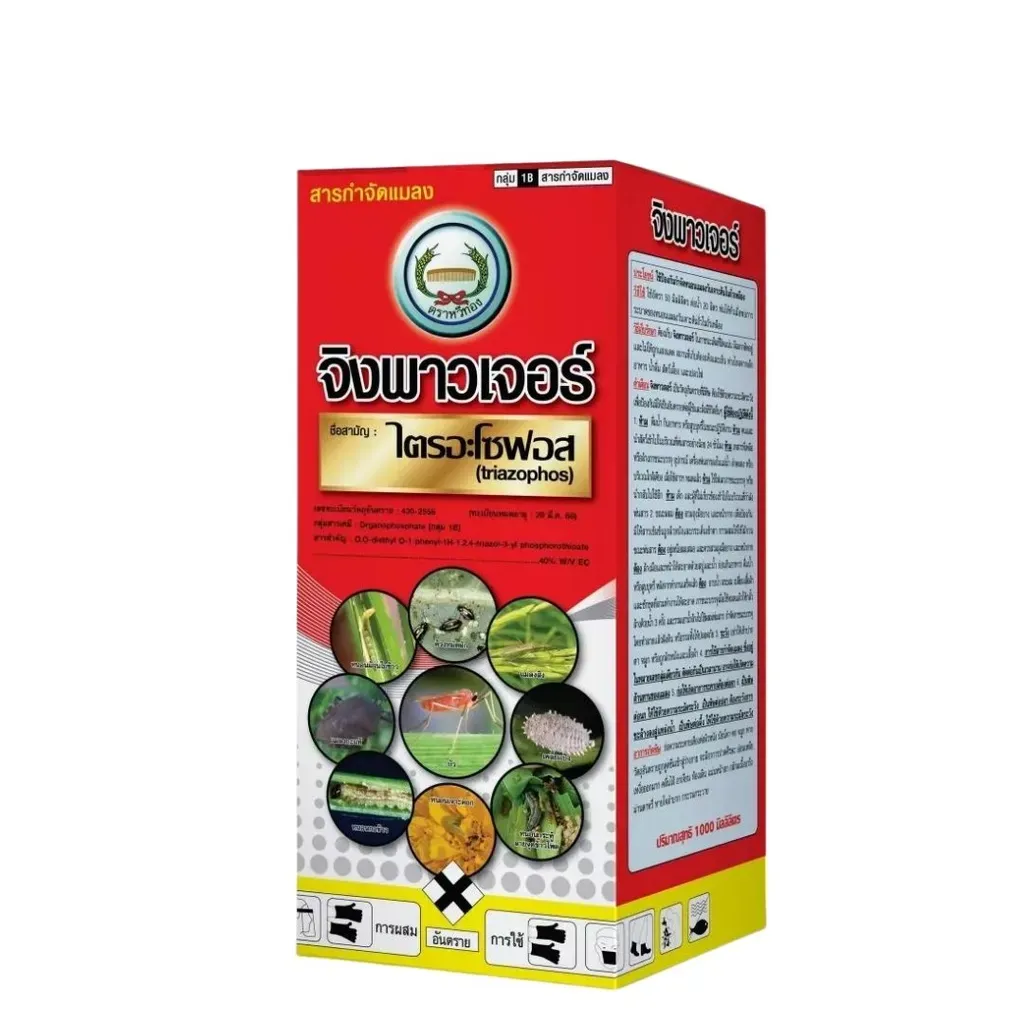
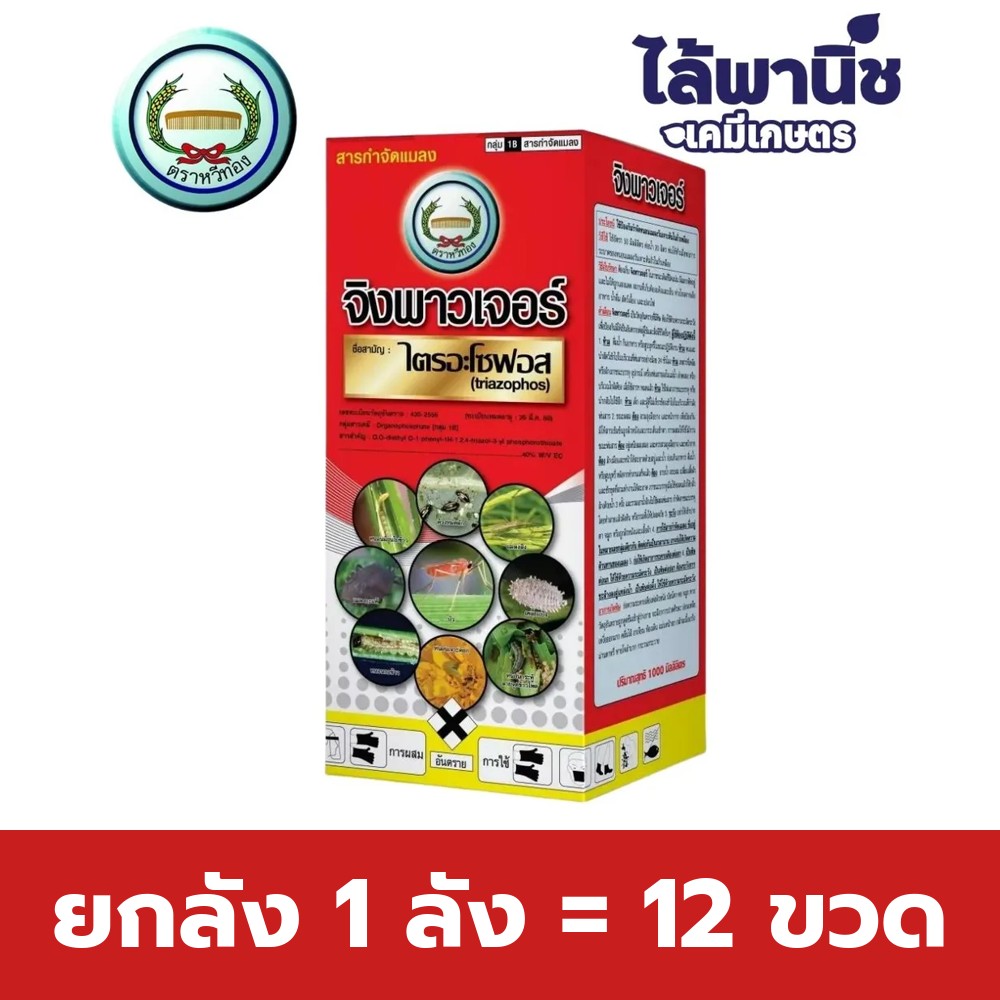
Jing Power (Triazophos) — Insecticide and miticide with fast action, controlling caterpillars, aphids, and mites.
Resistance Management: Triazophos — IRAC Group 1B · Rotate with active ingredients from different groups in cycles, do not use the same group repeatedly to delay resistance · Switch to a different chemical group when re-spraying.
Jing Power contains the active ingredient Triazophos 40% W/V EC, an organophosphate compound. It acts via contact, ingestion, and translaminar action through plant stomata, inhibiting enzymes in the insect nervous system to cause paralysis and eventual death. It also has ovicidal activity against insect eggs and mites.
Crops Applicable
Soybean | Coffee | Sorghum | Sesame | Peanut | Mung bean | Sunflower | Cotton | Jujube | Sweet potato | Mulberry | Shallot, multiplier onion | Grape | Yanagi mushroom, split gill mushroom | Cocoa | Rice paddies | Fruit trees | Vegetables | Flowering plants | Corn | Oil palm
Crops Prohibited
Sugarcane (avoid letting spray drift onto this crop)
Weeds/Pests/Diseases Controlled
- Caterpillars: Striped stem borer | Sugarcane stem borer | Fall armyworm | Beet armyworm | Grass armyworm | Cotton bollworm | Pod borer | Eggplant stem borer | Leaf miner | Leaf folder | Leaf-eating caterpillar | Stem borer
- Aphids/Sucking Pests: Thrips | Aphid | Planthopper | Durian psyllid | Longan psyllid | Scale insect | Mealybug | Leafhopper | Durian green leafhopper | Mango panicle leafhopper | Whitefly | True bug
- Mites: Garlic mite | African red mite | Kanzawa spider mite | Broad mite | Fiji spider mite
- Nematodes: Nematodes (effective against certain species of nematodes)
Mixing Rates and Usage
| Crop | Substance rate per 20 L of water (1 tank) | Water used per rai | Apply to |
|---|---|---|---|
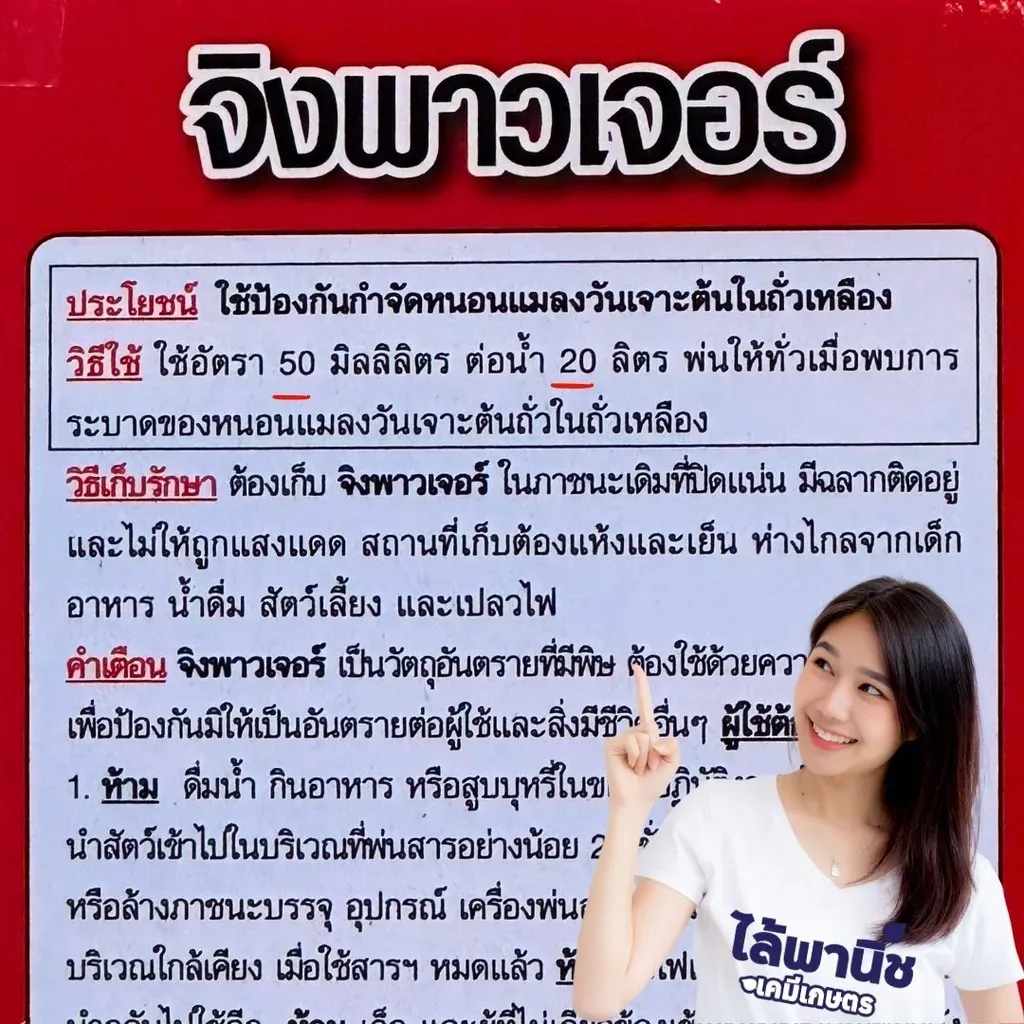
| Soybean | 50 milliliters | — | Bean stem fly — spray thoroughly upon infestation |
| Coffee | 40 ml | 200 L/rai | |
| Sorghum | 30–40 ml | 60 L/rai | Depending on the pest |
| Sesame | 50 ml | 160 L/rai | |
| Peanut | 40–50 ml | — | Depending on the pest |
| Mung bean | 40–50 ml | — | Depending on the pest |
| Sunflower | 40–50 ml | 160 L/rai | Depending on the pest |
| Cotton | 120 ml | 80 L/rai | |
| Jujube | 30 ml | — | |
| Sweet potato | 40 ml | 160 L/rai | |
| Mulberry | 40 ml | 80 L/rai | |
| Shallot, Spring onion | 30 ml | 120 L/rai | |
| Grape | 30 ml | — | |
| Yanagi mushroom, split gill mushroom | 30 ml | — | |
| Cocoa | 20 ml | — |
Read the rates correctly: The numbers in the table are the amount of substance per 1 tank (20 L) of water, not per rai — spraying 1 rai uses multiple tanks of water.
Coverage per 1 Package (1 L)
Soybean at 50 ml per 20 L of water (1 tank): 20 tanks
Calculated directly from the table above — does not account for re-spraying and residual chemicals left in the tank; please purchase extra just in case.
Spray thoroughly when pest infestation is found, covering both the upper and lower surfaces of leaves to ensure contact and good leaf penetration. In rice paddies, maintain a shallow water level of about 3-5 cm after spraying.
For Best Results
- Contact insecticide — Acts upon direct contact with the insect; must be sprayed thoroughly on the insect body / entire canopy · Fast-acting, but can be washed off by rain. If it rains after spraying, a re-spray is necessary
- Best: When pest outbreaks are found, or when insects start laying eggs and larvae have just hatched — Spray only on plants with rates listed in the table below
- Do not: Do not spray on very windy days or if rain is expected within 1 hour after spraying
Precautions
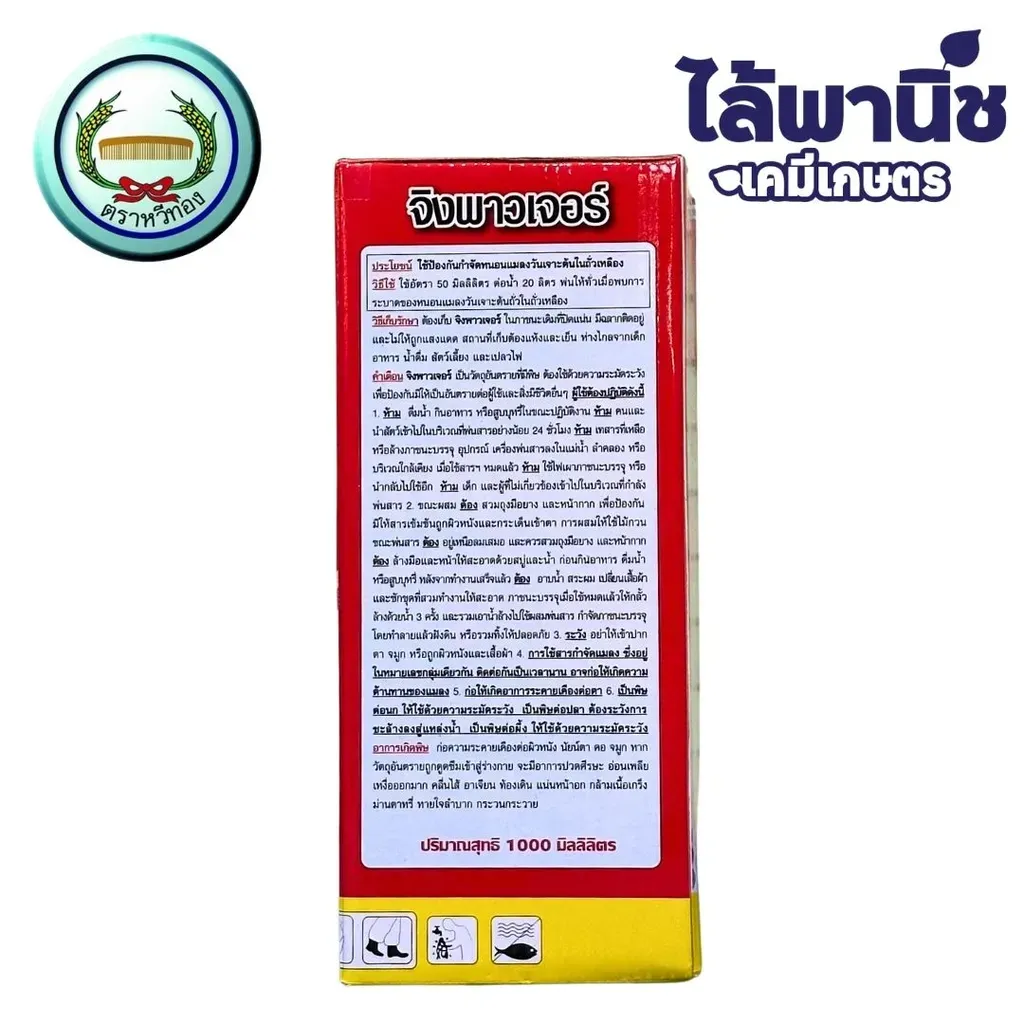
- This is a hazardous chemical. Keep out of reach of children, food, and pets.
- Wear protective equipment such as gloves, masks, goggles, and protective clothing every time when mixing and spraying.
- Avoid inhaling vapors or chemical mists and be careful not to get it in eyes or on skin.
- Do not dispose of empty containers into public water sources.
- The pre-harvest interval (PHI) for rice is 30 days and it can be used a maximum of 2 times per growing season.
- After spraying, the area should be cordoned off and people or animals should be prohibited from entering the sprayed area for at least 24 hours.
- If symptoms of poisoning occur from contact or exposure to the substance, seek medical attention immediately and bring the product label with you.
Pre-Harvest Interval (PHI)
- Beans — Do not spray 14 days before harvest
Read the rates correctly by unit
The rates above are the amount of substance per 1 tank (20 L) of water, which is how it's written on the label. Actual spraying for 1 rai uses approximately 60–80 L (3–4 tanks) of water. Therefore, the amount per rai must be multiplied by the number of tanks used. — Always refer to the container label.