
-
Brand
-
Formulation Type
-
Packaging
-380.00 ฿
/Gallon
 Ask for case price / Is it in stock? → Chat LINE
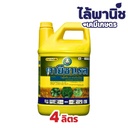
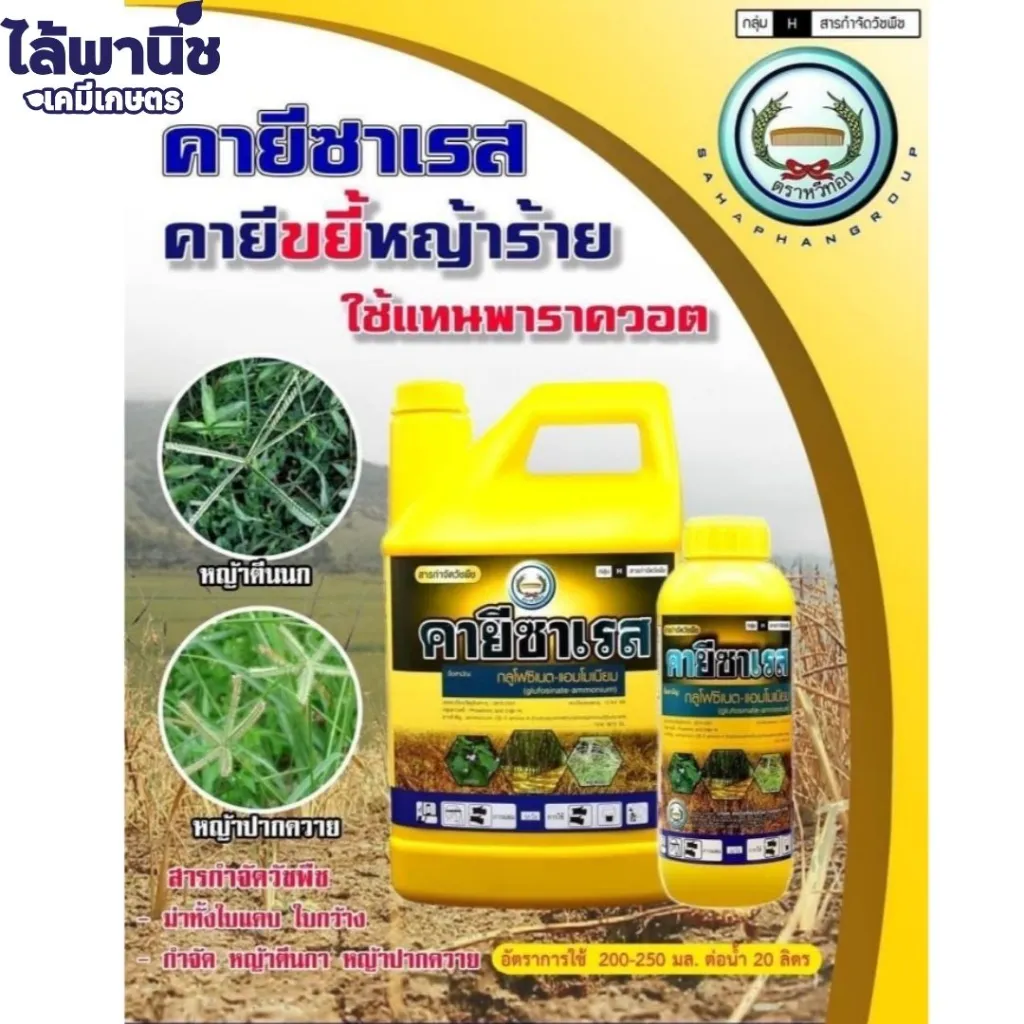
Herbicide — Controls both narrow-leaf and broad-leaf weeds. Fast-acting, degrades quickly, non-selective. Do not allow spray to contact cultivated plants.
Resistance Management: Glufosinate-ammonium — HRAC Group H · Should be rotated with different groups of substances in cycles, do not use the same group repeatedly to slow down resistance · Switch to a different group when reapplying.
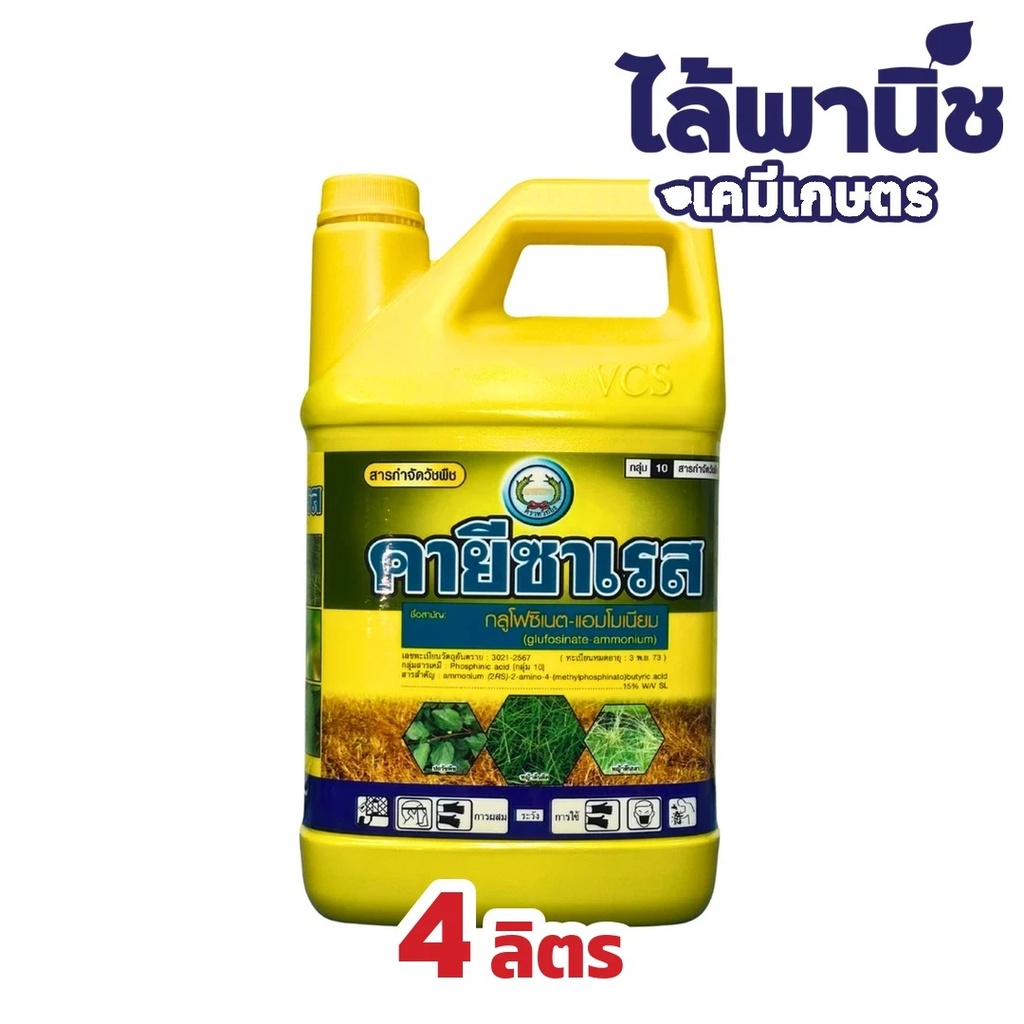
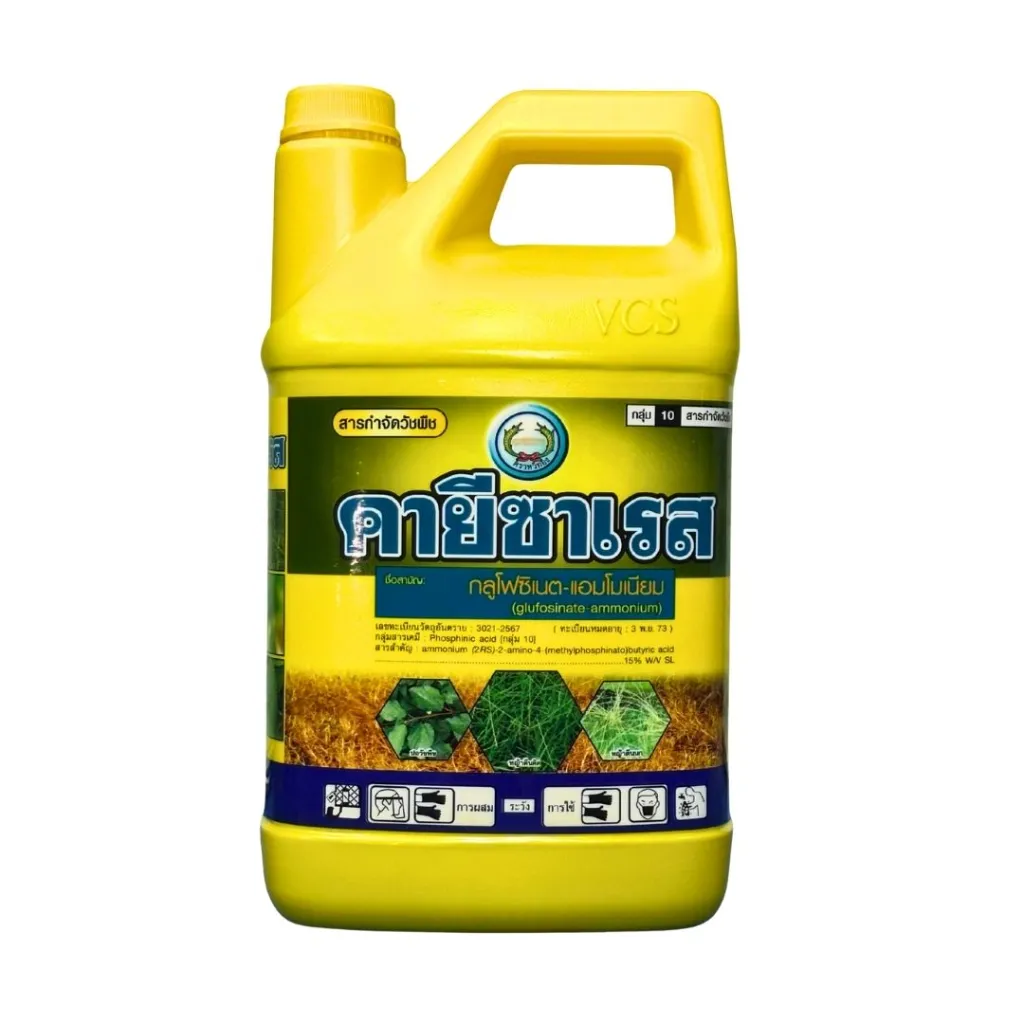
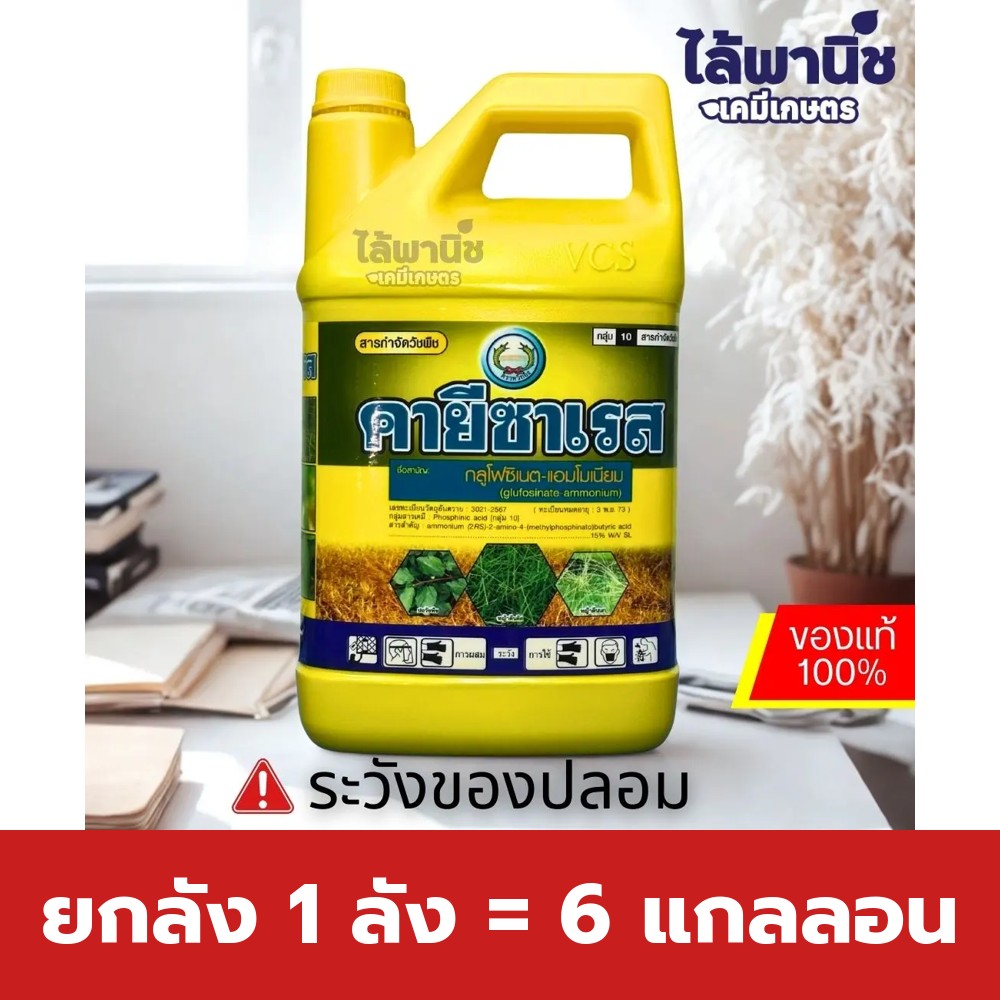
Kayisares contains the active ingredient glufosinate-ammonium 15% W/V SL. It acts by contact and absorption only on the green parts of plants, inhibiting key enzymes in photosynthesis, causing weeds to stop growing and eventually burn. This substance degrades easily in soil, leaves no residue, but is non-selective. Care must be taken to avoid spraying on the leaves or stems of cultivated plants.
Applicable crops
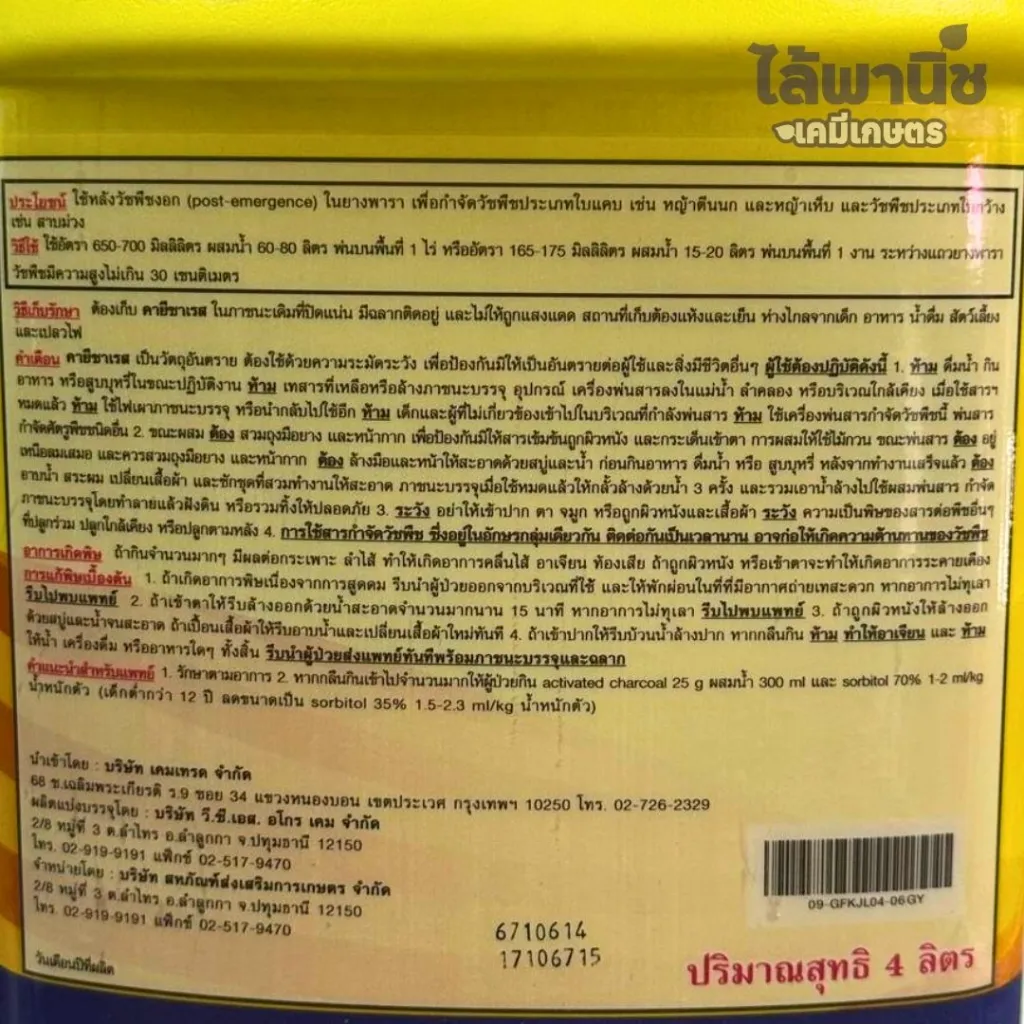
Specified on this bottle's label (rates in the table below): Para rubber
Other plants where this substance is used — Not yet confirmed with this bottle label. Please inquire with the shop before use: Oil palm | Fruit trees | Corn | Cassava | Levee | Chili.
Plants requiring special caution
Rice (be careful not to let the spray directly contact rice plants, especially cultivated rice) | Other unspecified vegetables (direct contact with cultivated plants should be avoided).
Weeds that can be controlled
Narrow-leaf weeds (goosegrass, tick grass) and broad-leaf weeds (Siam weed) | Narrow-leaf and broad-leaf weeds | Bamboo grass | Smallflower beggartick | Malaysian grass | Johnson grass | Crowfoot grass | Bird's nest grass | Buffalo grass | Pink grass | Crabgrass | Whiteflower grass | Large peacock grass | Hail grass | Joint grass | Hairy crabgrass | Bermuda grass | Imperata cylindrica | Mikania micrantha | Large button weed | Peperomia pellucida | Gecko foot | Khmer grass | Praab weed | Wild hemp | Jute weed | Acalypha indica | Purslane | Amaranth | Hairy cleome | Rubber grass | Euphorbia hirta | Creeping mimosa | Phyllanthus urinaria | Ageratum conyzoides | Green-flowered sedge | Sugarcane sedge | Nutgrass.
Mixing Rates and Usage
| Crop | Substance Rate | Mix with Water | Area Covered | Apply to |
|---|---|---|---|---|
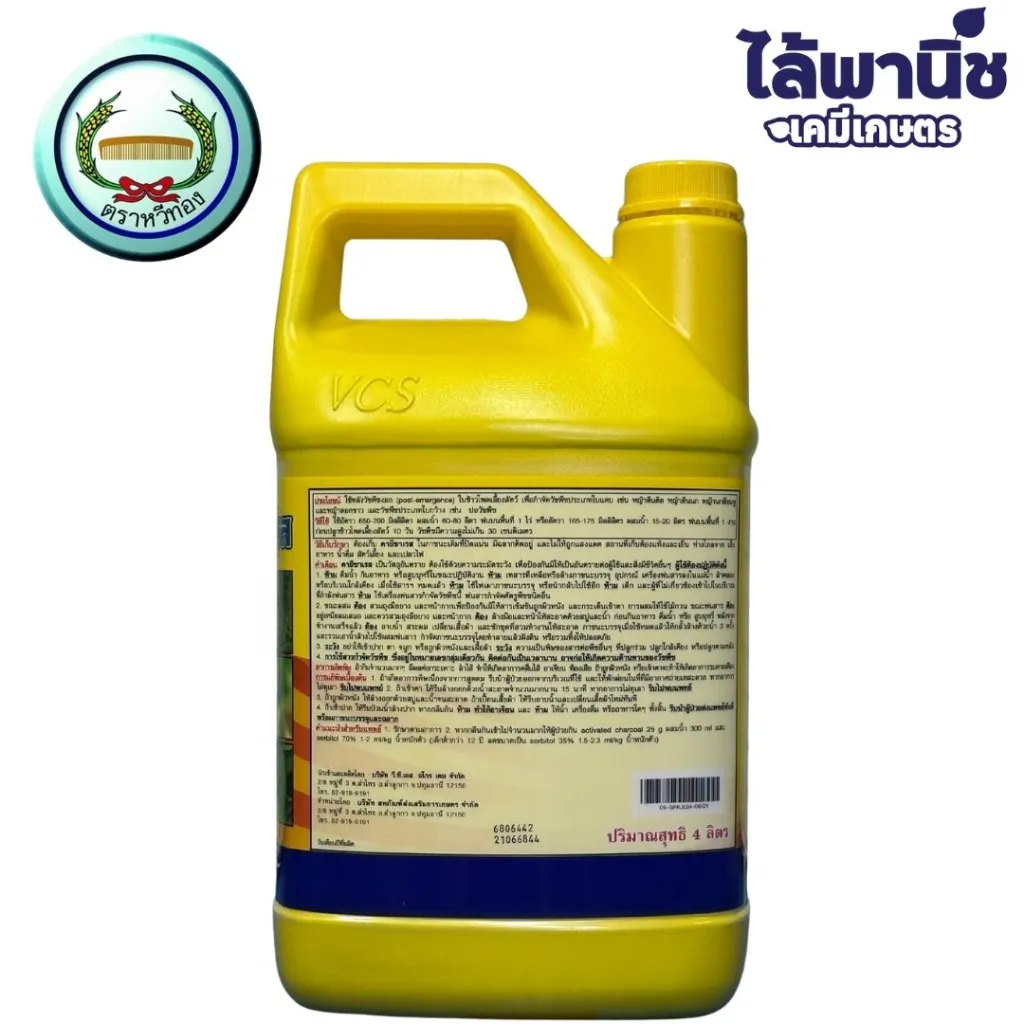
| Rubber | 650-700 ml | Water 60-80 L | 1 rai | Narrowleaf weeds (crowfoot grass, tropical carpet grass) and broadleaf weeds (Siam weed) — use post-emergence |
| Rubber | 165-175 ml | Water 15-20 L | 1 ngan | Narrowleaf and broadleaf weeds — use post-emergence |
Spray between para rubber rows while weeds do not exceed 30 centimeters in height
Read the rates correctly: This product's rate is calculated per area, not per tank — 1 rai = 4 ngan · If spraying with a 20-liter tank, refer to the “1 ngan” row in the table.
How much can 1 unit (4 L) cover?
Rubber trees at 650-700 ml per rai: 5.7-6.2 rai
Calculated directly from the rate in the table above — does not account for repeat spraying and residual substance in the tank. It is advisable to purchase extra.
Usage Notes: Spray onto emerging weeds no taller than 30 cm. Care should be taken to prevent the spray from directly contacting the main crop's stems and leaves. This gallon label specifies spraying between rubber tree rows. The rain-free period is short, only 2-4 hours.
For Best Results
- Best: After weeds emerge, no taller than 30 cm.
- Do not: Do not spray when winds are strong, as the spray may drift onto the main crop or sensitive nearby plants.
Precautions
- This is a hazardous chemical. Keep out of reach of children, food, and pets.
- Always wear personal protective equipment such as rubber gloves, masks, goggles, and long-sleeved, long-legged clothing when mixing and spraying the substance.
- Avoid inhaling chemical spray and be careful not to get it in your eyes or on your skin directly, as it may cause severe irritation or eye damage.
- Do not ingest this chemical. If swallowed, do not induce vomiting, and immediately take the patient to a doctor with the container or label.
- Toxic to aquatic organisms. Care should be taken to prevent contamination of water sources.
- Spraying should be done in the morning when the sun is not intense or in the evening when the wind is calm, for better efficacy and to reduce spray drift.
- After use, always wash equipment and your body thoroughly with soap and water.