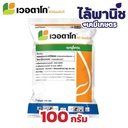

-
Brand
-
Formulation Type
-
Packaging
-620.00 ฿
/Sachet
 Ask for case price / Is it in stock? → Chat LINE
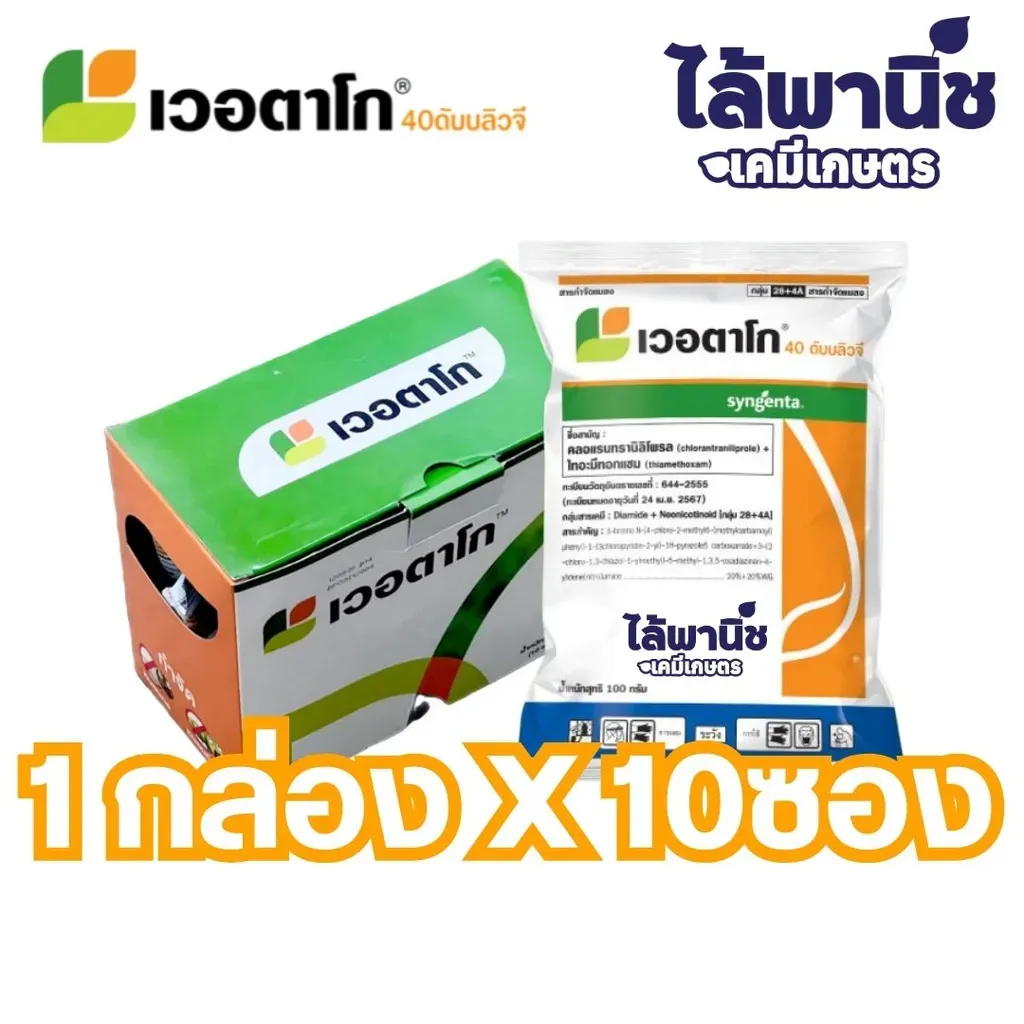
Vertako — Dual-action insecticide combining 2 groups to control both caterpillars and aphids in a single granule
Anti-resistance: Active ingredient 1: Chlorantraniliprole — IRAC Group 28 (Diamide) · Active ingredient 2: Thiamethoxam — IRAC Group 4A (Neonicotinoid) · Rotate with other groups every 2–3 spray generations to delay resistance · Switch to a different chemical group when spraying repeatedly
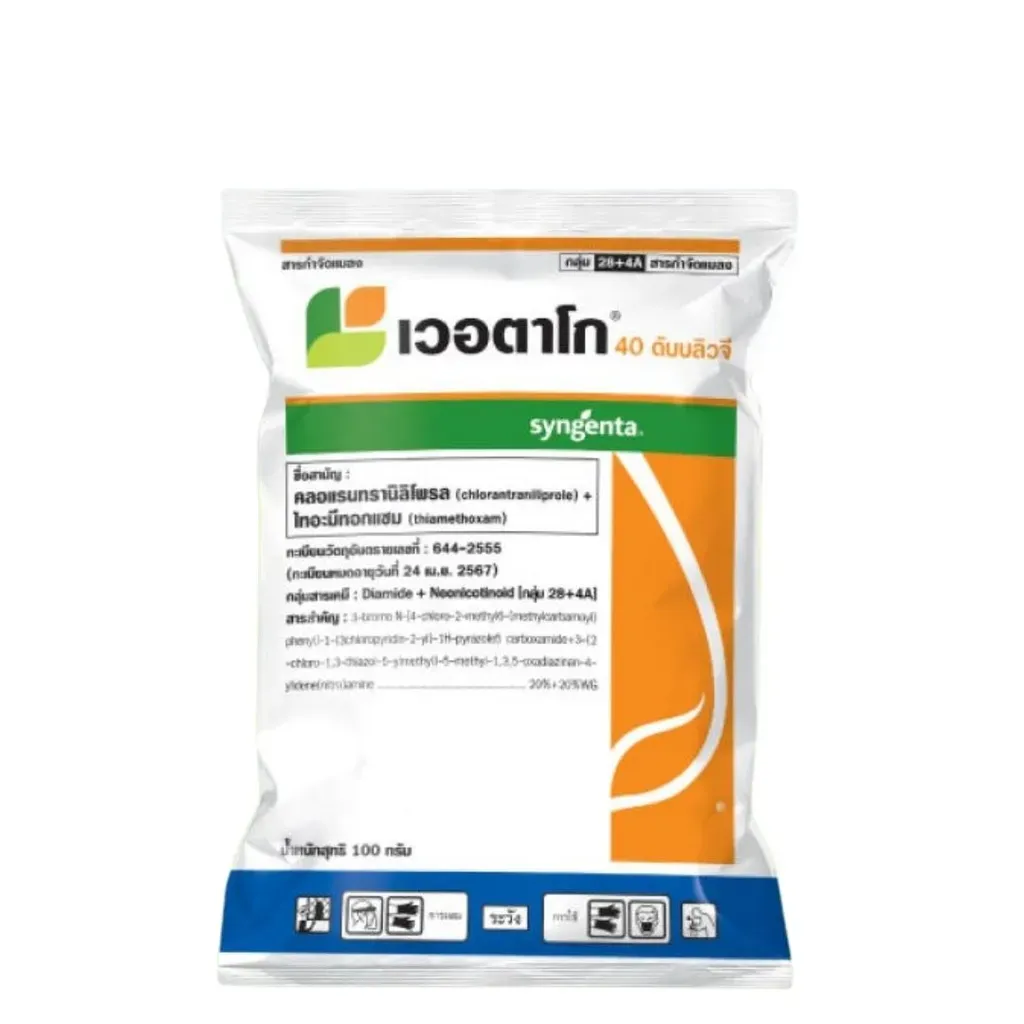
Vertako is a WG (water dispersible granule) insecticide that combines 2 active ingredients with different mechanisms: Chlorantraniliprole 20% (diamide group — controls caterpillars) and Thiamethoxam 20% (neonicotinoid group — controls sucking pests), effectively eliminating both caterpillars and aphids in a single application. Easy to store, with no solvent odor
2 active ingredients — Complementary mechanisms
- Chlorantraniliprole 20% — Diamide group (IRAC 28) stimulates ryanodine receptors, causing caterpillar muscles to spasm into paralysis and die. Highly effective against all types of caterpillars (Lepidoptera)
- Thiamethoxam 20% — Neonicotinoid group (IRAC 4A) systemic action that disrupts the nervous system of sucking pests, controlling brown planthoppers, leafhoppers, aphids, and thrips
Target pests
Rice leaf folder | Rice stem borer | Corn spot armyworm | Corn earworm | Sugarcane stem borer | Cabbage webworm | Beet armyworm | Fall armyworm | Rice leaf roller | Stem borer | Diamondback moth | Fruit borer | Brown planthopper | Leafhopper (from thiamethoxam) | Aphid | Thrips
Applicable crops
Rice | Field corn | Sweet corn | Sugarcane | Chinese cabbage | Cabbage | Shallot | Corn | All vegetables | Beans | Fruit trees
Key features
Broader pest control than single active ingredients — especially in rice paddies which often suffer simultaneous outbreaks of stem borers and planthoppers; a single spray of Vertako handles both
Mixing Rates and Usage
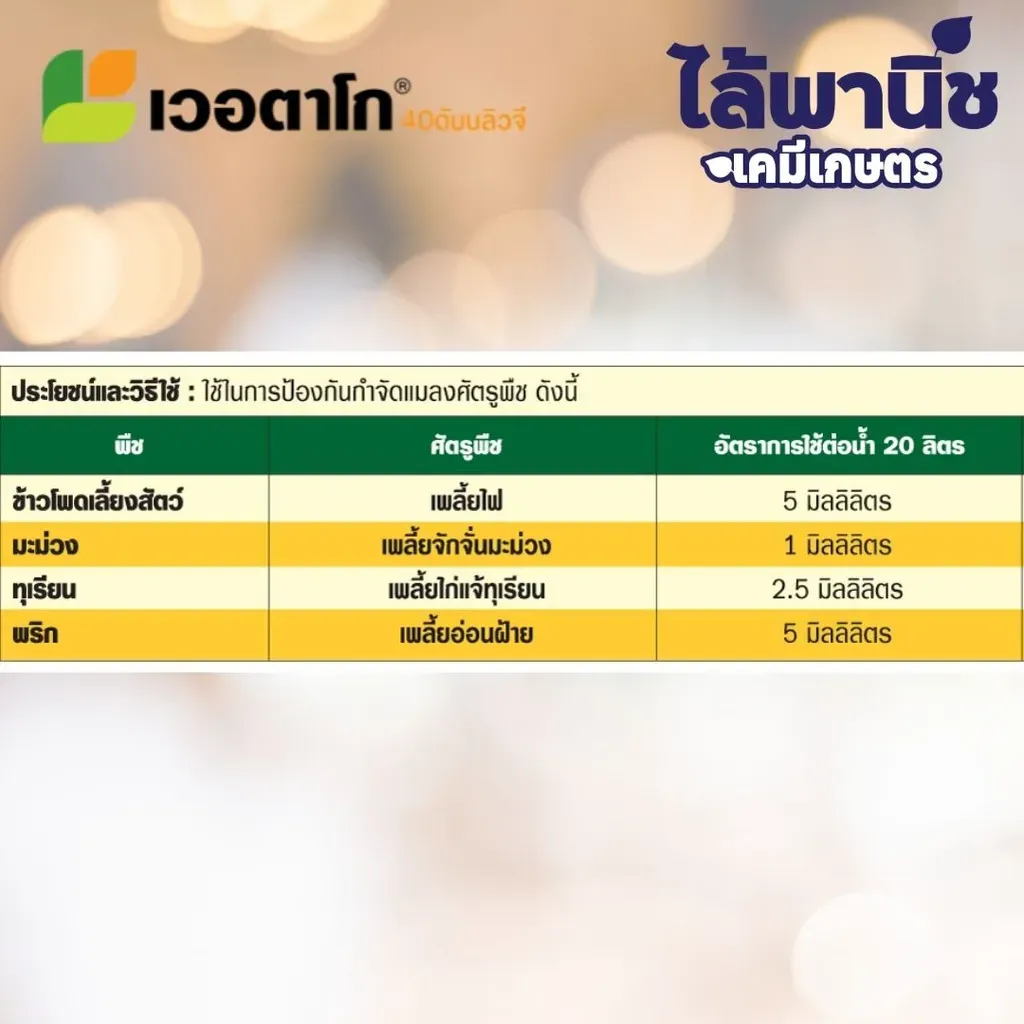
| Crop | Substance rate per 20 L of water (1 tank) | Water used per rai | Apply to |
|---|---|---|---|
| Rice | 8 g | 40 L/rai (rice aged up to 40 days) · 60 L/rai (rice aged over 40 days) | Rice leaf folder — spray when rice leaf damage exceeds 15% |
| Rice | 12 g | 40 L/rai (rice aged up to 40 days) · 60 L/rai (rice aged over 40 days) | Rice stem borer — spray when rice plants show wilted shoot symptoms exceeding 10% |
| Field corn | 8 g | — | Fall armyworm |
| Sweet corn | 6 g | — | Fall armyworm |
| Sweet corn | 3 g | — | Corn earworm |
| Sugarcane | 20 g | — | Sugarcane stem borer |
| Chinese cabbage | 3 g | — | Beet armyworm |
| Cabbage | 3 g | — | Beet armyworm |
| Shallots | 6 g | — | Common cutworm |
Do not harvest rice within 30 days after the final spray
Read the rates correctly: The numbers in the table are the amount of substance per 1 tank (20 L) of water, not per rai — spraying 1 rai uses multiple tanks of water.
1 Packaging Unit (100 g) Coverage Estimate
Rice (Rice leaf folder) at 8 g per 20 L water (1 tank) and water volume of 40-60 L/rai: 12 tanks or 4.2-6.2 rai
Rice (Yellow stem borer) at 12 g per 20 L water (1 tank) and water volume of 40-60 L/rai: 8.3 tanks or 2.8-4.2 rai
Field corn at 8 g per 20 L water (1 tank): 12 tanks
Sweet corn (Fall armyworm) at 6 g per 20 L water (1 tank): 17 tanks
Sweet corn (Corn earworm) at 3 g per 20 L water (1 tank): 33 tanks
Sugarcane at 20 g per 20 L water (1 tank): 5 tanks
Chinese Cabbage at 3 g per 20 L water (1 tank): 33 tanks
Cabbage at 3 g per 20 L water (1 tank): 33 tanks
Shallot at 6 g per 20 L water (1 tank): 17 tanks
Calculated directly from the rates in the table above — does not account for repeat applications or tank residue. Please purchase extra as a buffer.
For Best Results
- Best: Spray when eggs hatch/small caterpillars appear or pests begin to strike, before a severe outbreak
- Not recommended: Spraying after caterpillars have bored deep into the stem, as the product is difficult to reach them
Precautions
- Thiamethoxam is toxic to bees — avoid spraying during blooming periods or when bees are active
- Rotate chemical groups, do not use Group 28 or 4A consecutively to prevent insect resistance
- Wear gloves and a mask while mixing and spraying
- Store in a cool, dry place away from sunlight